
Puebla Travel Day 05: Tacos Árabes in Paper, Salsas from Mild to Hot, Xochimilco at Night
Mexico diary, day 5: a Puebla breakfast with salsas explained mild to hot, a nieve shop, tacos árabes to go in paper, then Xochimilco and late tacos.
Part 5 / 10
"It's un árabe, un oriental, para llevar."
At half past one, at a taco counter near the arcades on Puebla's Zócalo, that is how my order ended up. It first went in as "dos árabes", then got fixed to one of each, two in total. They said they could only wrap it in paper to go. I said paper was fine.
This is the fifth day of a trip to Mexico for tacos: 5 October 2025. Day 4 was Chapultepec Castle and the teal-lit Monument to the Revolution. This day I had breakfast, lunch and dessert in Puebla, east of Mexico City, and by night I was on the canals of Xochimilco. The two-day summary is in Mexico Trip 03: Puebla, Xochimilco at Night, Guadalupe.
📍 Day 5 eating route: courtyard breakfast → Palafoxiana Library → nieve shop → tacos árabes to go → Xochimilco by night → late tacos
| When | Where | What I ate, what's on camera |
|---|---|---|
| 9 a.m. | Courtyard restaurant, Puebla | Fruit, orange juice, a plate under three sauces, the salsa rundown |
| 10:40s | Palafoxiana Library | Three tiers of bookcases, the gold altarpiece |
| 11:30 | Nieve shop | A chalkboard packed with flavours |
| 1:30 p.m. | Taco place near the Zócalo | One taco árabe, one taco oriental, to go |
| Evening to 10 p.m. | Xochimilco → taco place | Canals, chile en nogada talk, tacos under cilantro |
9 a.m.: from the least spicy to the most
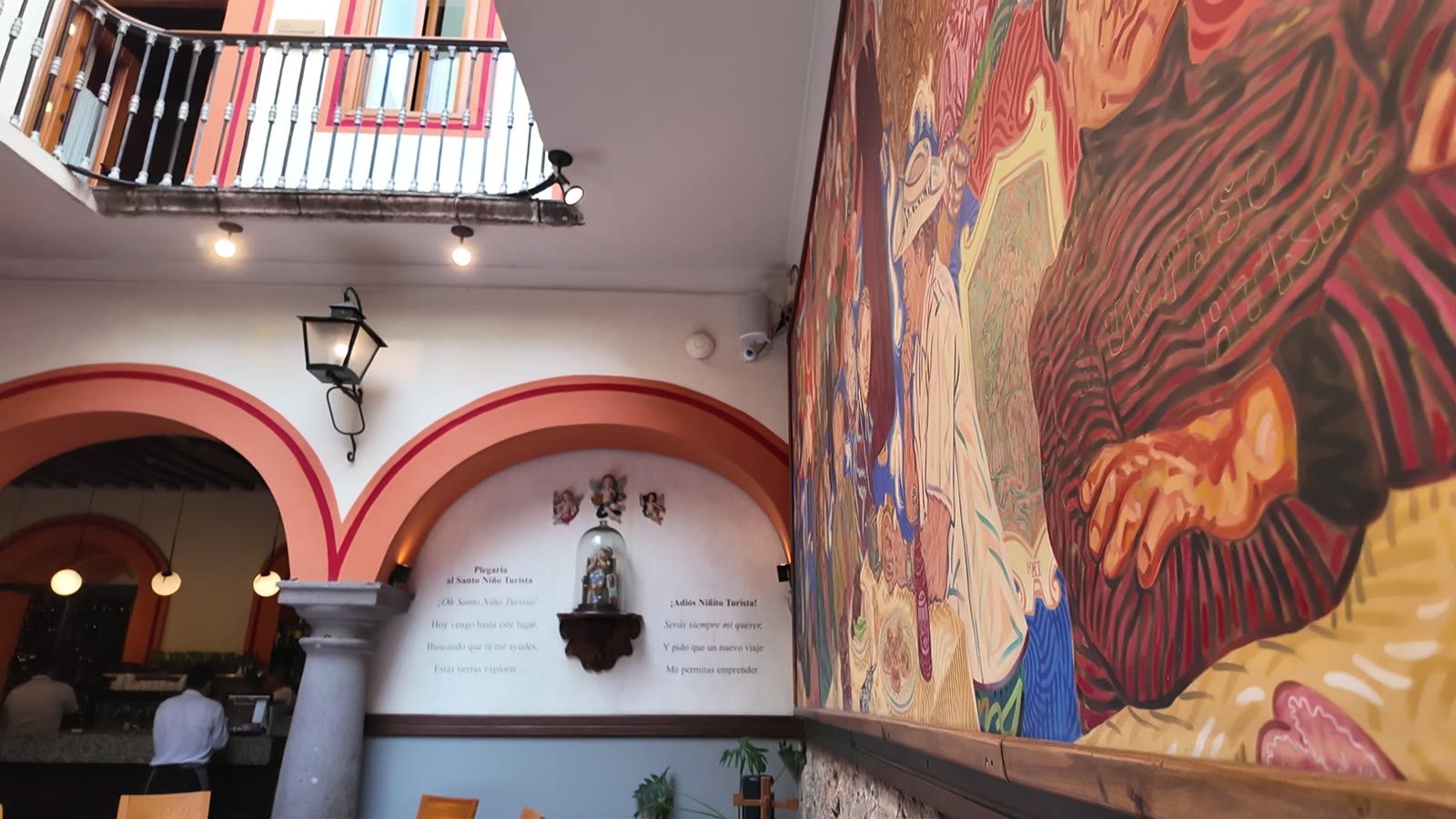
The camera was on from 5:43 that morning. Breakfast was around nine at a restaurant in Puebla, in a courtyard ringed with red arches and one wall taken up by a huge mural. On the white wall beside the arches was a prayer: "Plegaria al Santo Niño Turista", a prayer to the Holy Child of Tourists.
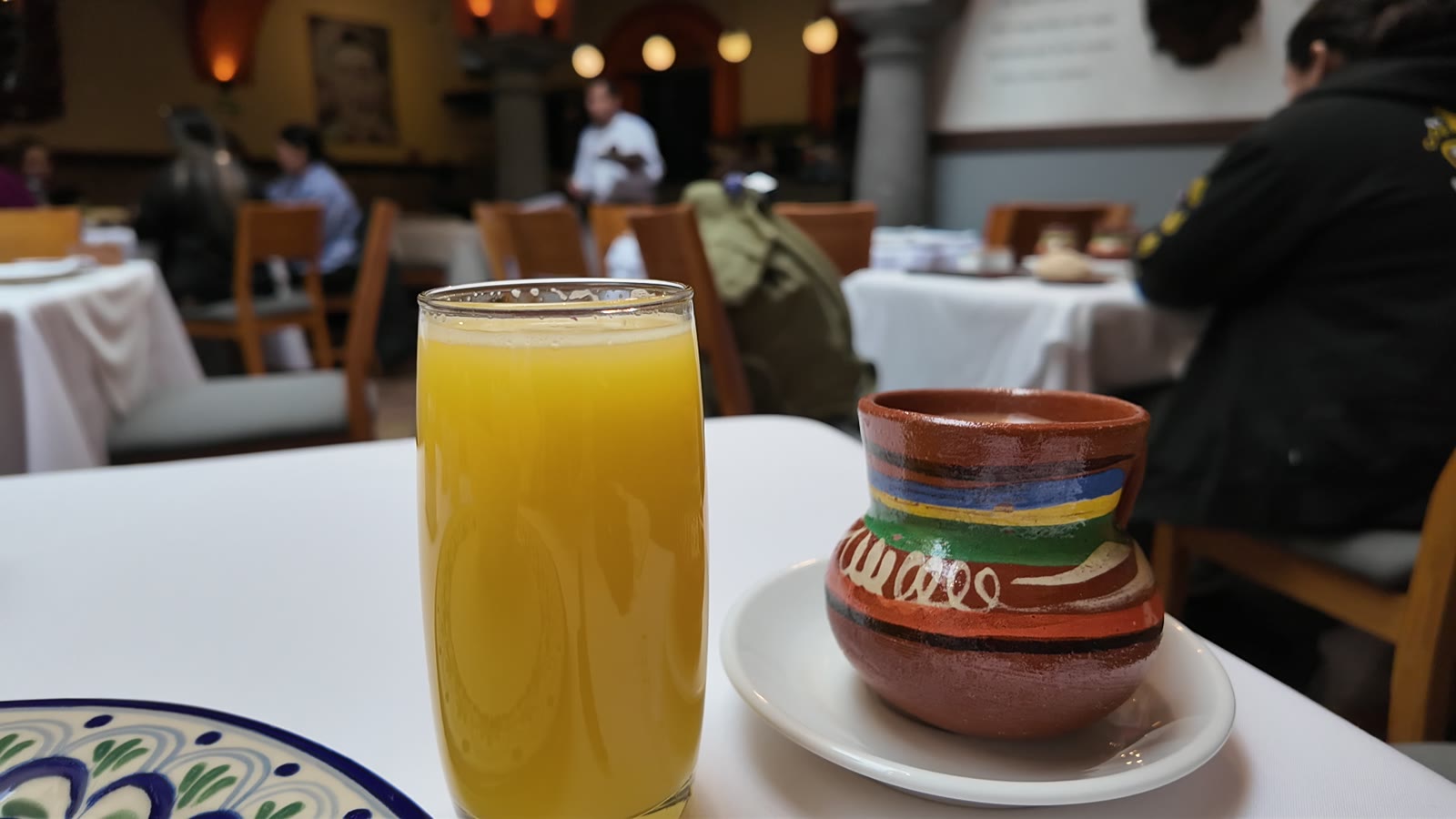
First came a bowl of fruit: watermelon, papaya, banana and orange with a mint leaf on top. Next to it, a glass of orange juice and a small striped clay cup.
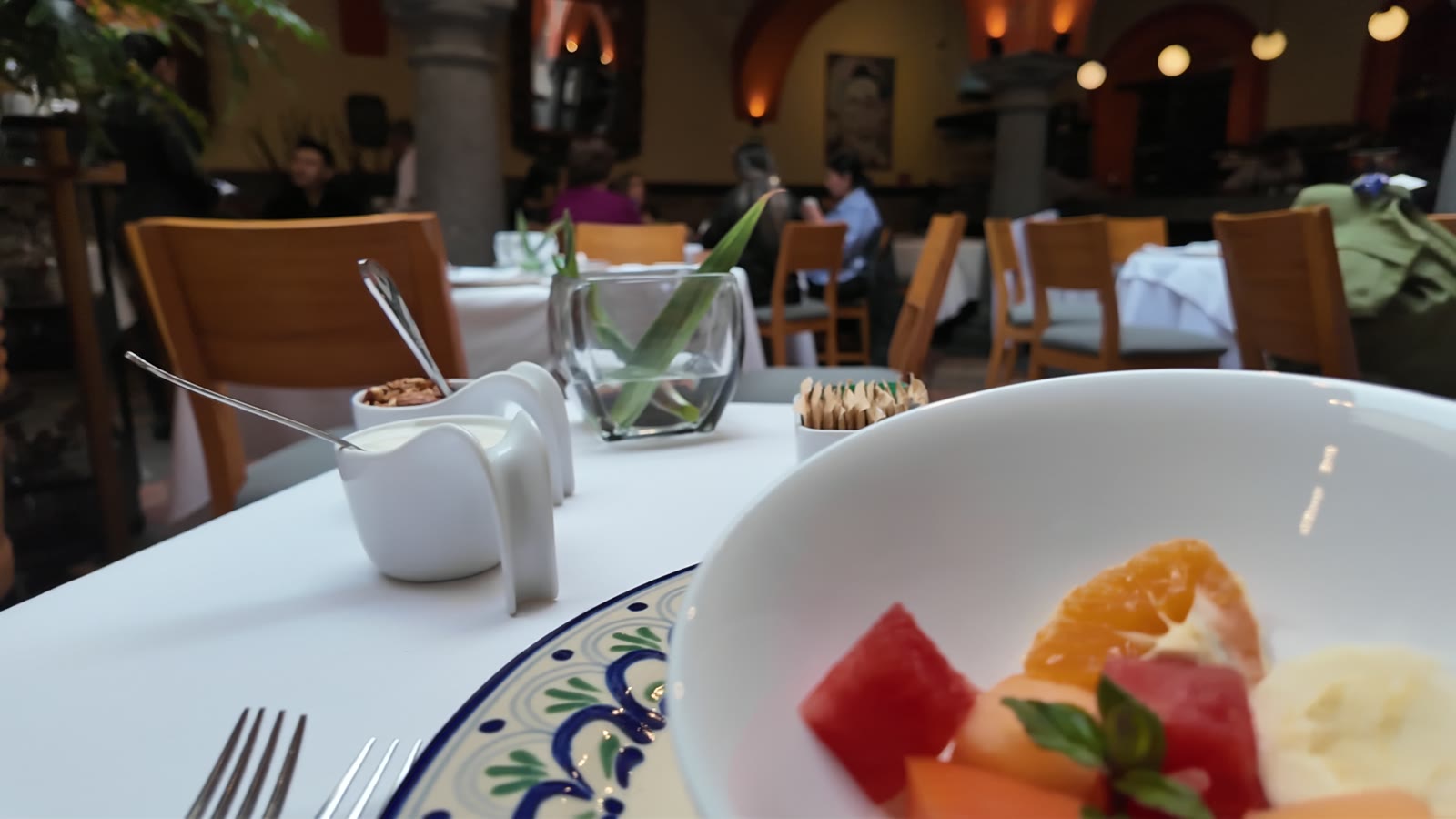
The waiter listed what was going on the table. As the video has it: butter and jam, plátano con guayaba, and salsas. The salsas went serrano, jalapeño, habanero. "De la menos a la más picante." From the least spicy to the most.
The main plate was covered in three sauces side by side: dark brown with sesame seeds, orange with crushed nuts, pale green with pumpkin seeds. The name of the dish didn't make it onto the camera.
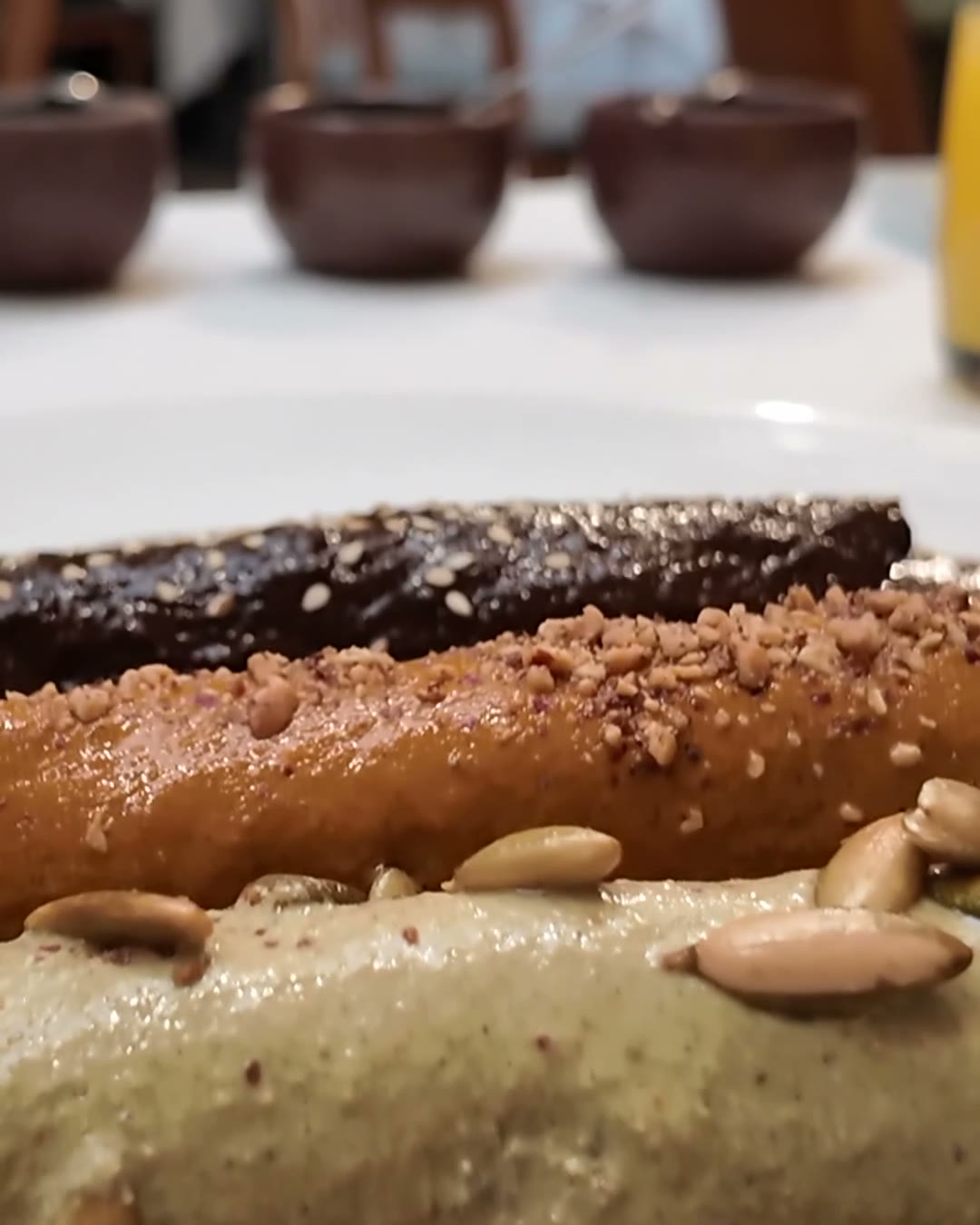
Day five of a taco trip, and breakfast was three stripes of sauce, not a taco. The 9:47 clip has "La cuenta, por favor" twice.
10:43: the Palafoxiana Library
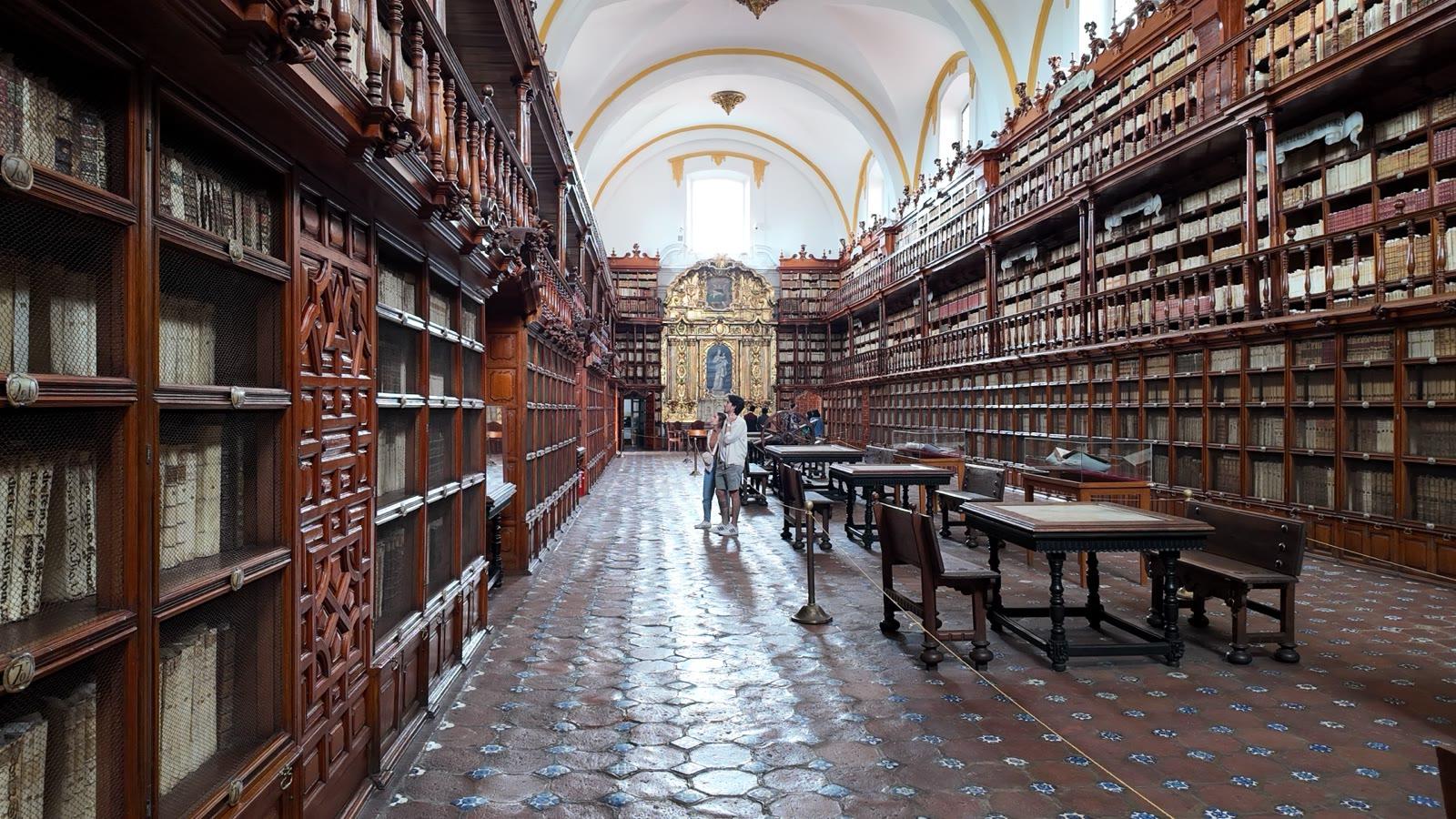
The morning was a walk through the old town. A glass-roofed courtyard had red, white and green papel picado laid out in rings, and at 10:43 I walked into the Palafoxiana Library. Wooden bookcases cover both long walls in three tiers, and at the far end, under a white vaulted ceiling, stands a gold altarpiece.
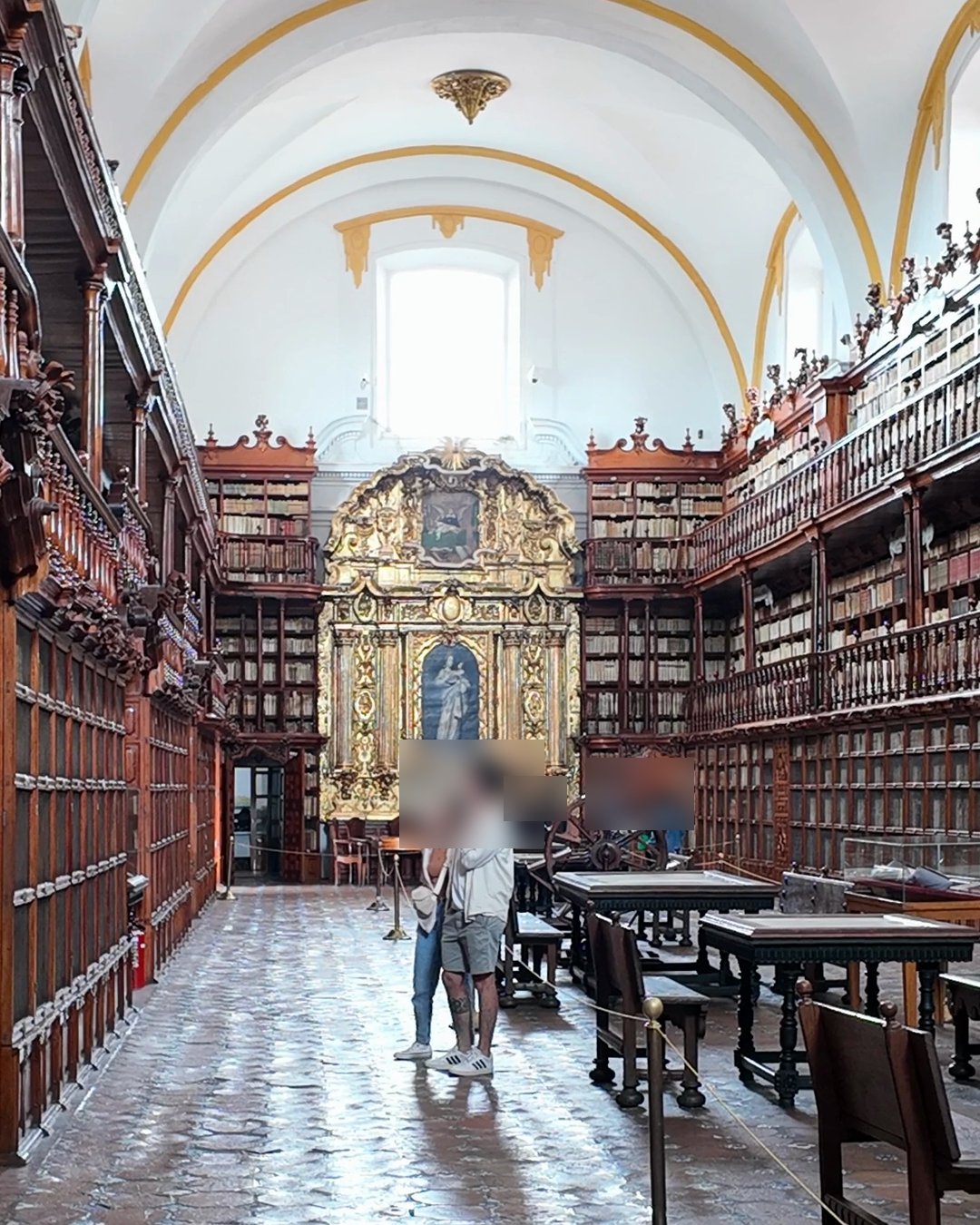
The library began in 1646, when Bishop Juan de Palafox y Mendoza donated about 5,000 of his books. The roughly 43-metre hall you see now was built in 1773. Visitors keep to the central aisle; the desks in front of the shelves are roped off. I took one selfie with my back to the altar.
11:30: the nieve shop's chalkboard
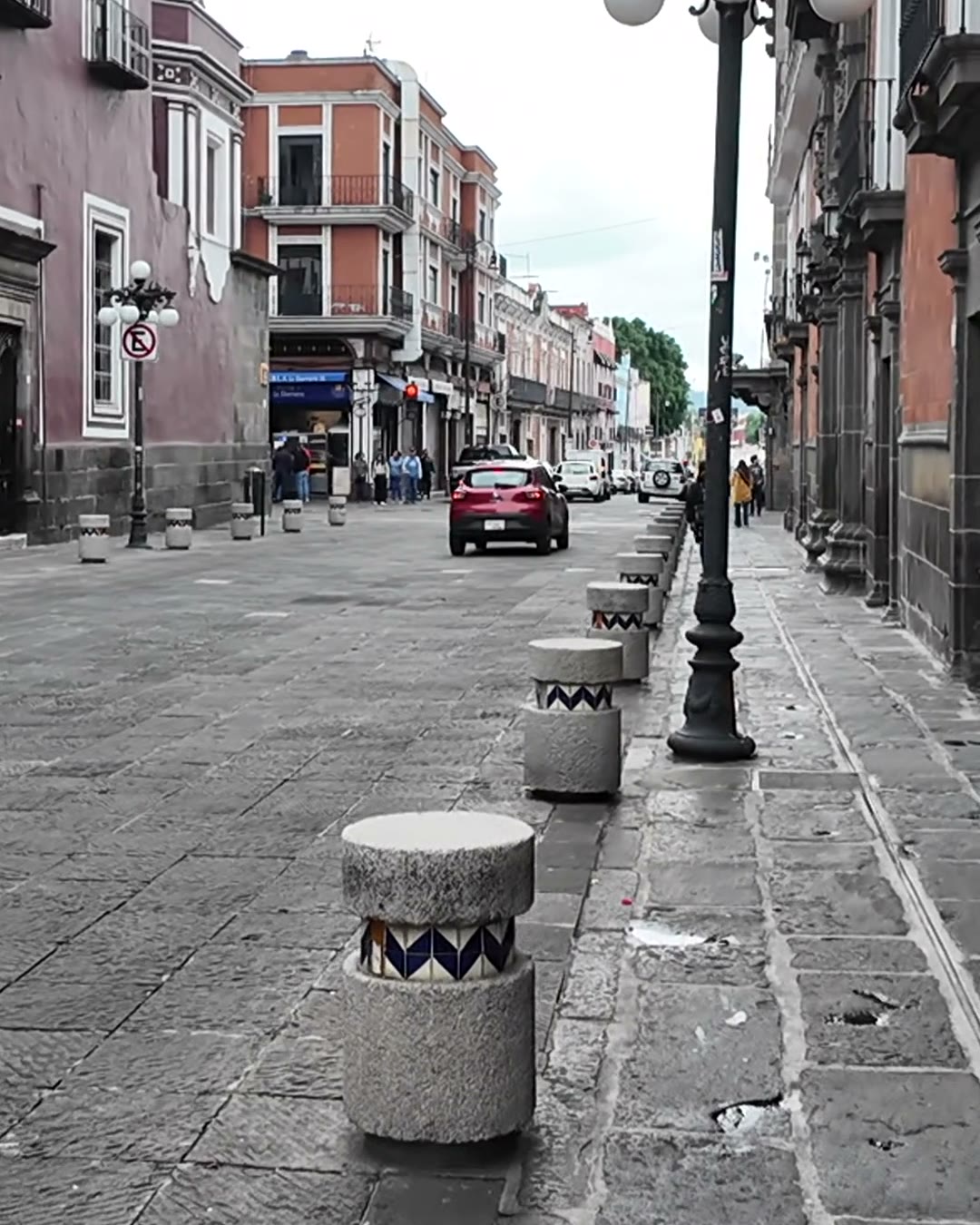
Outside the library, every stone bollard along the kerb wore a band of blue zigzag tiles. Talavera. Puebla puts pottery even on the posts that keep cars off the pavement.
Around 11:30 I went into an ice cream shop. At the bottom of the chalkboard was the name, Heladería Delizzia Gourmet Centro, and above it flavour after flavour: maracuyá, tamarindo, mandarina, guayaba cajeta y nuez, mojito, and in the premium column carajillo and nogada. Paletas, the ice lollies, were 25 and 30 pesos.
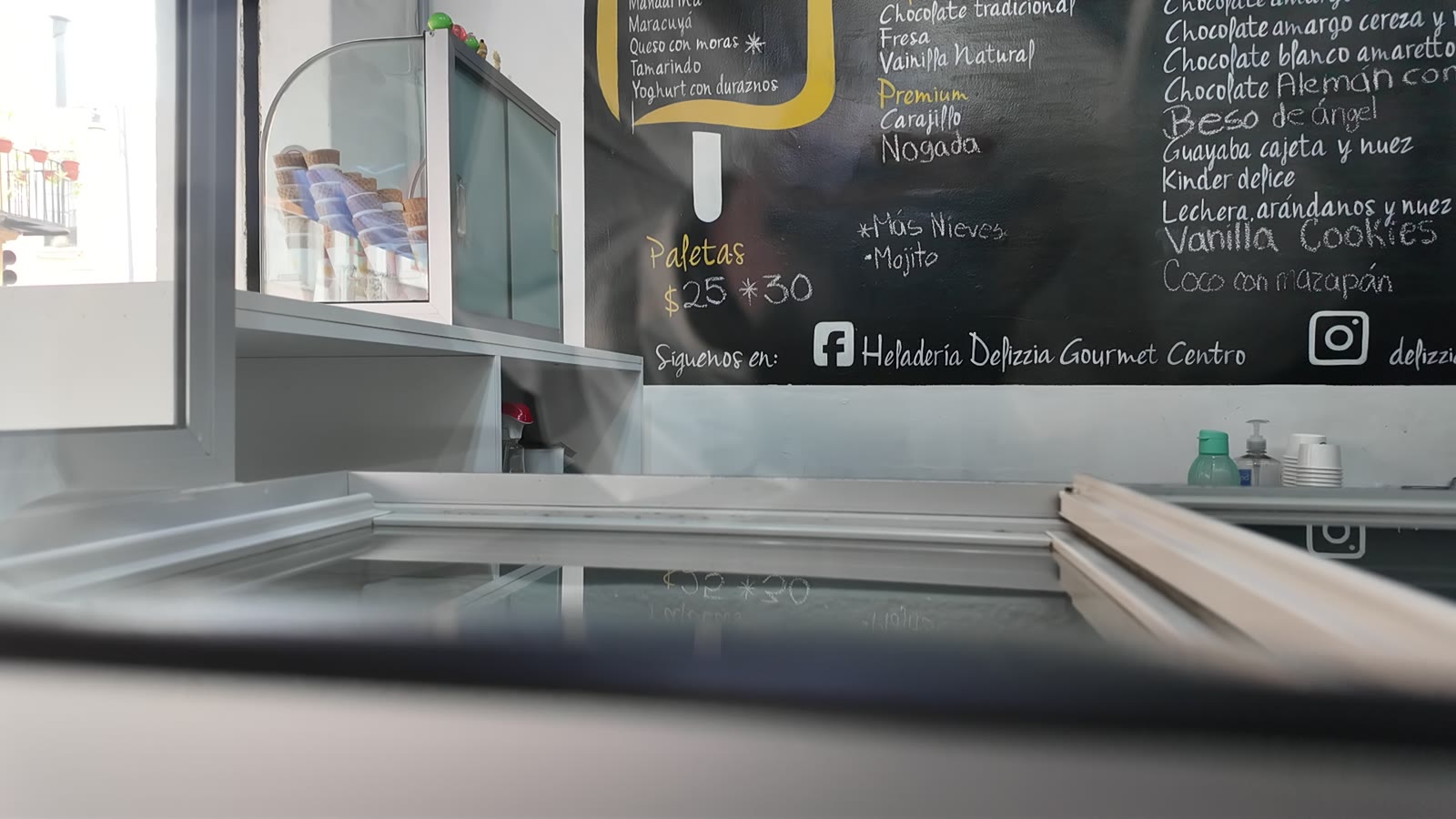
The person behind the counter went through the kinds one by one and said they come in a small cup, a vasito, or a cone. The card by the till said nieve is made with water and fresh fruit, helado with milk. At the end of the clip I can hear "double", tamarindo, limoncello. The cup itself isn't on camera.
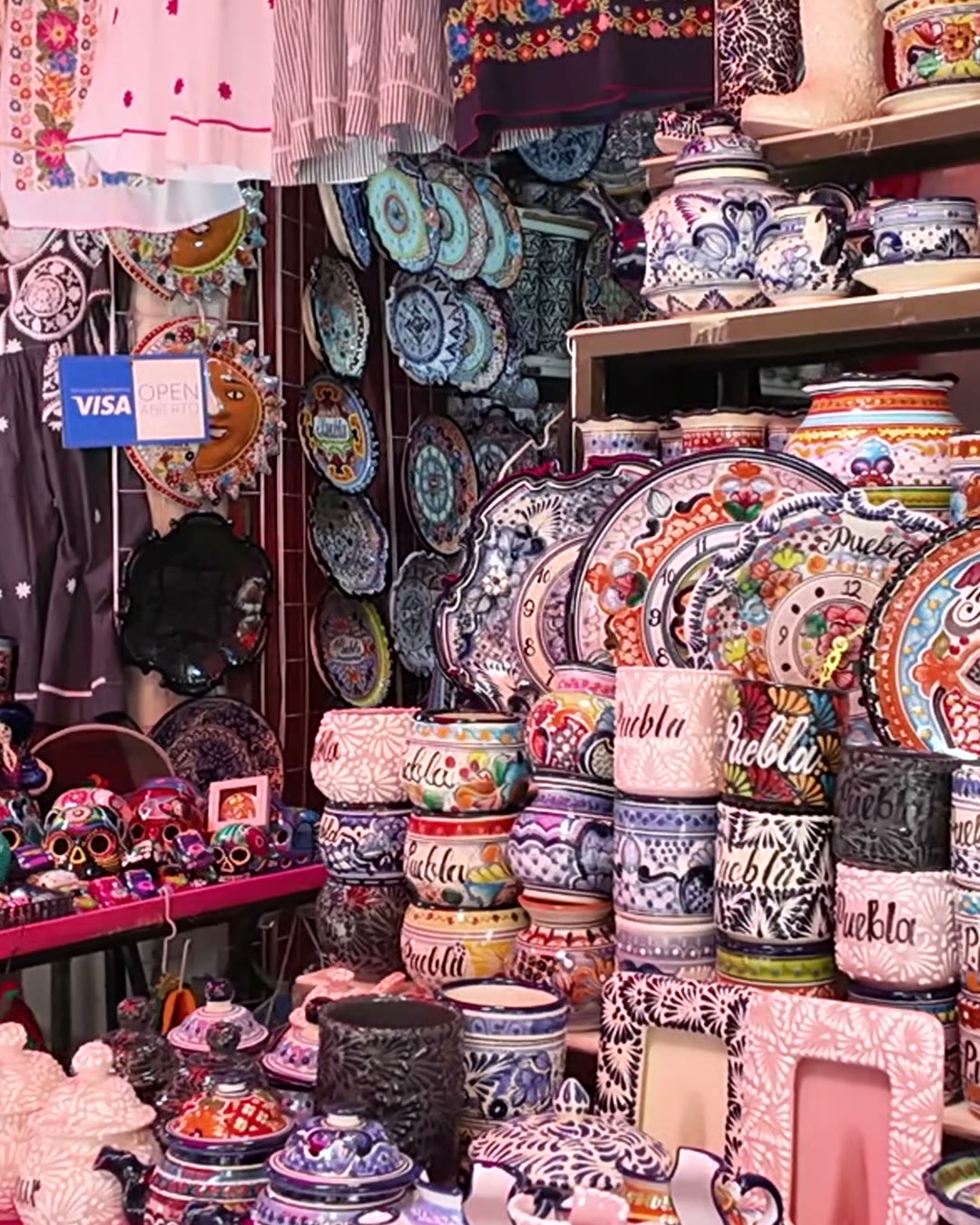
Around noon I stopped at a Talavera pottery shop. Every mug in the front row had the word Puebla on it.
1:30 p.m.: one taco árabe, one taco oriental
At 1:24, walking under the arches of the Zócalo, I said "It's so beautiful." Four minutes later I was at a taco counter nearby.
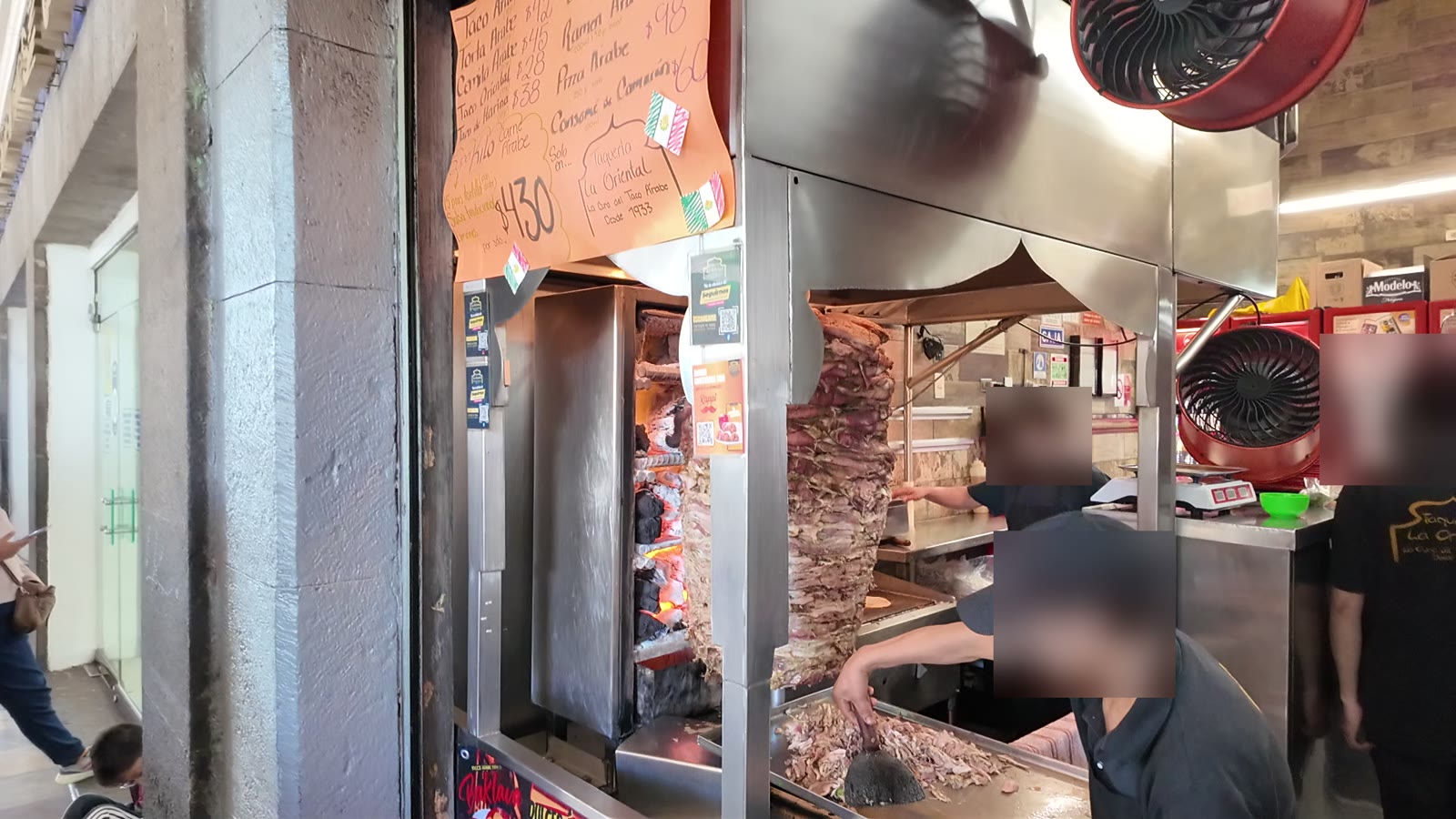
Meat was stacked high on a vertical spit by the counter, and on the griddle below a cook was scraping it together. The orange menu taped above was handwritten: Taco Árabe, Torta Árabe, Cemita Árabe, Taco Oriental, Taco de Harina. Taco oriental 28 pesos, taco de harina 38, a kilo of meat 430. In the corner: the name Taquería La Oriental and the year 1933.
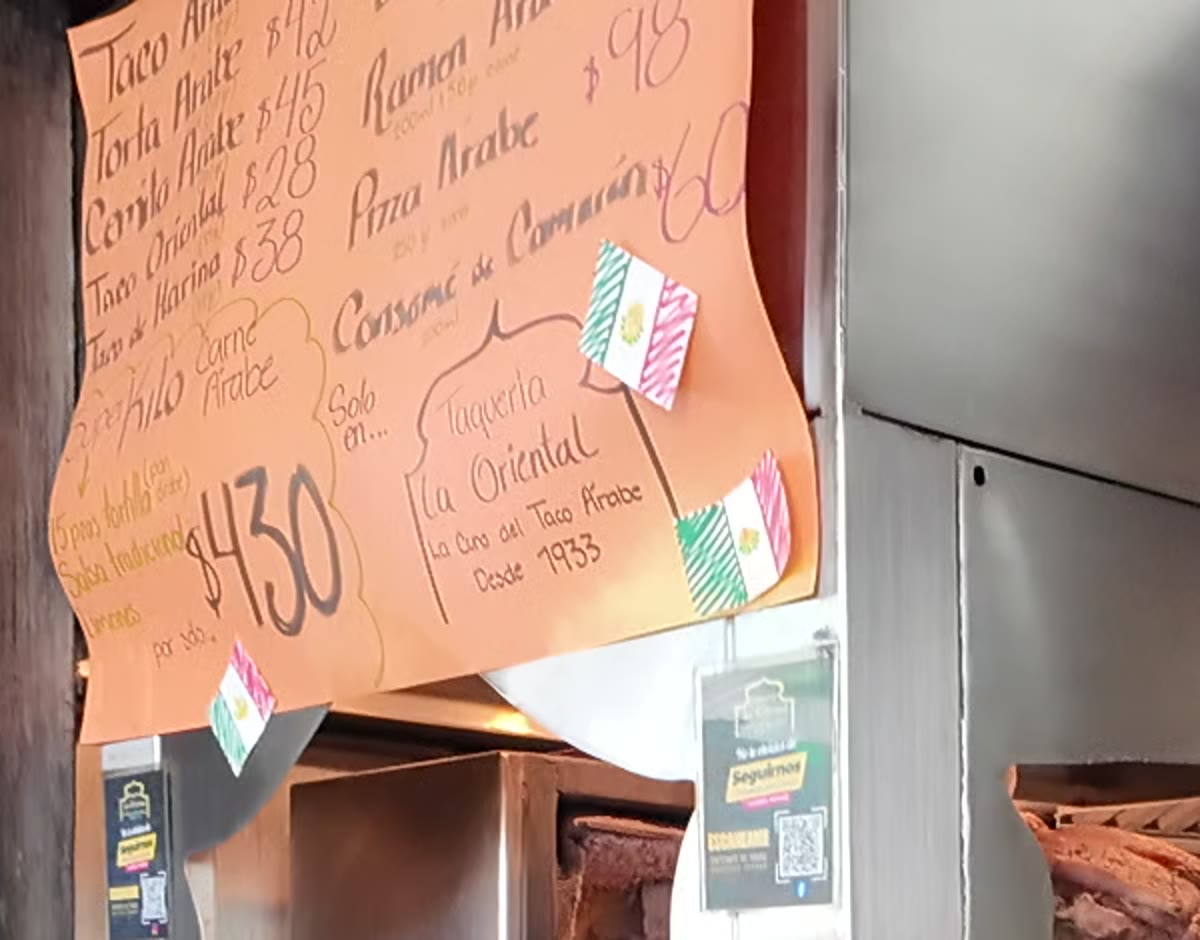
The taco árabe is said to have come to Puebla with immigrants from the Middle East in the 1930s. Marinated pork is stacked on a vertical spit, cooked, and wrapped not in a corn tortilla but in a thin flour bread. Many accounts say Mexico City's al pastor branched off from it.
The order was half English, half Spanish. First I asked what a taco de harina was. Same thing, the answer went; only the tortilla is different, a thinner one. So I went for a taco árabe and a taco oriental.
The order read back at the counter was "Taco, dos árabes y uno oriental." It was soon corrected to "uno, uno". One each, two in total. Asked if I wanted salsa, I said yes. They could only wrap it in paper to go, and I said "Paper is fine."
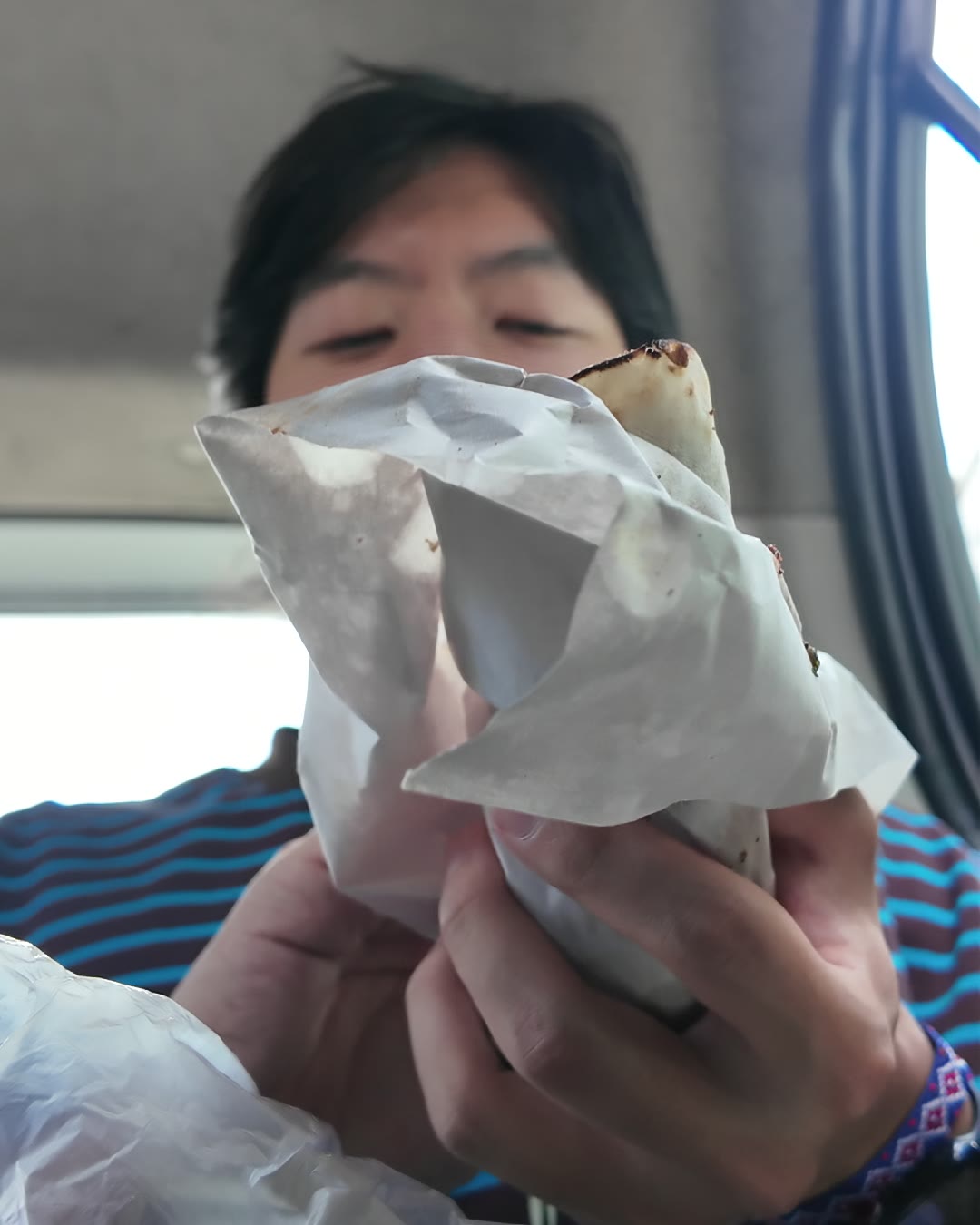
I opened it in the car. Out of the plastic bag came the paper parcel, and inside the paper, the end of the rolled bread. I held it in both hands and took a big bite.
Xochimilco at night, and chile en nogada
In the evening I was on the water at Xochimilco, in the south of Mexico City. The sun was down and only blue was left in the sky; weeds floated on the canal between the trees, and far off a white pyramid-shaped structure was lit up.
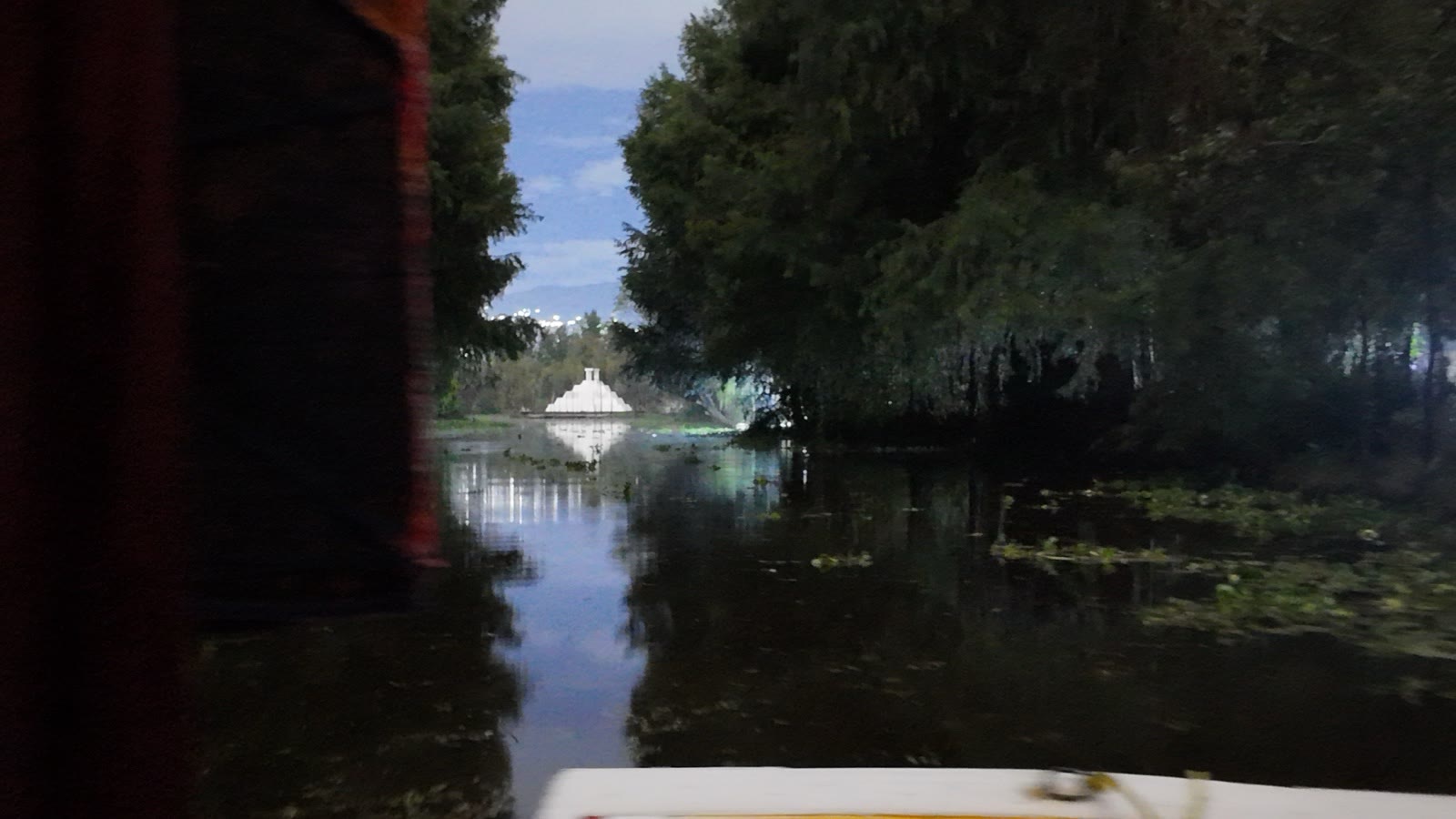
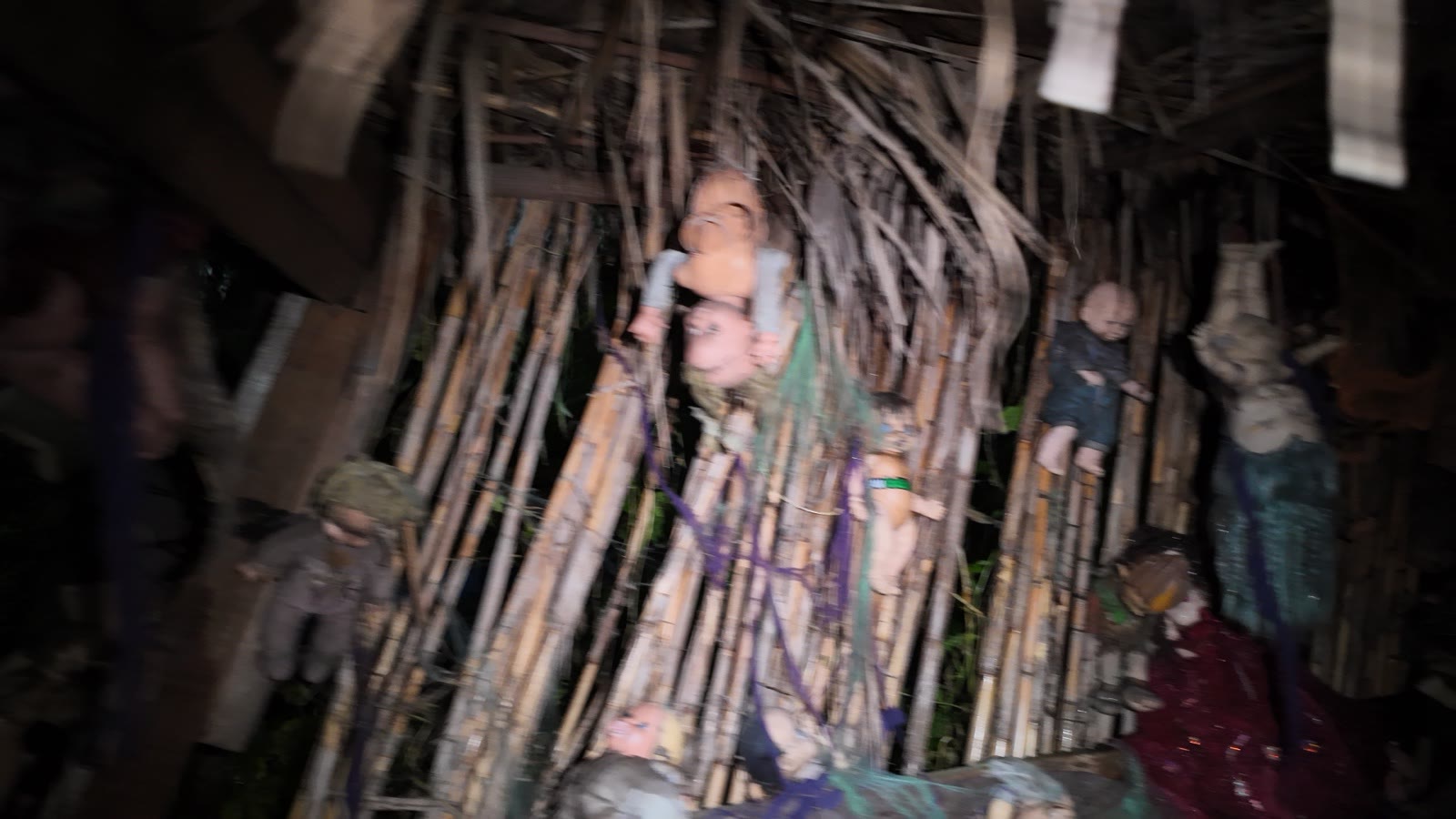
The 7:40 p.m. clip has an English-speaking guide: "It's going to have another creepy story." The hut we stopped at had reed walls hung with old dolls, upside down and sideways.
At 8:13, on the dark water, the talk turned to food. First longaniza: not a sausage, they said, here it's called longaniza. Then chile en nogada: a dish eaten only in the September season, so the season might be over, and they weren't sure if restaurants still had it. To "That's the one that's a chile?" the answer was "Uh-huh."
Chile en nogada is known as a dish from Puebla: a chile stuffed with meat and fruit, covered in a walnut cream sauce and scattered with pomegranate seeds. That day I met the word nogada three times: on the ice cream chalkboard, on a chalkboard next to the taco place, and on the canal. I didn't eat it.
10 p.m.: cilantro, onion, salsa in cups
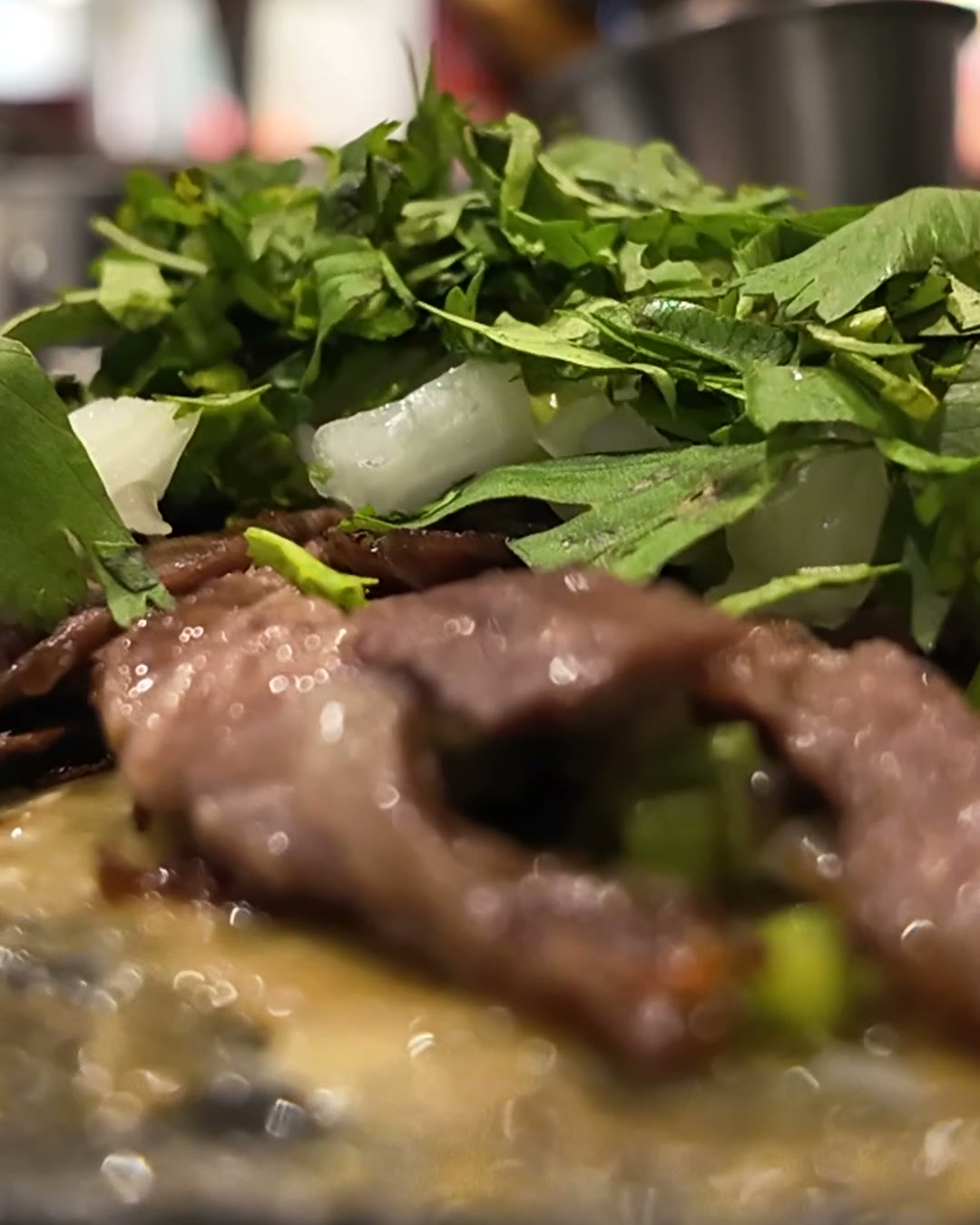
At 9:56 p.m. the tacos came: grilled meat piled with cilantro and chopped onion. The clip has a single "Thank you." On the table were small metal cups of red and greenish salsa, and I squeezed a lime over by hand.
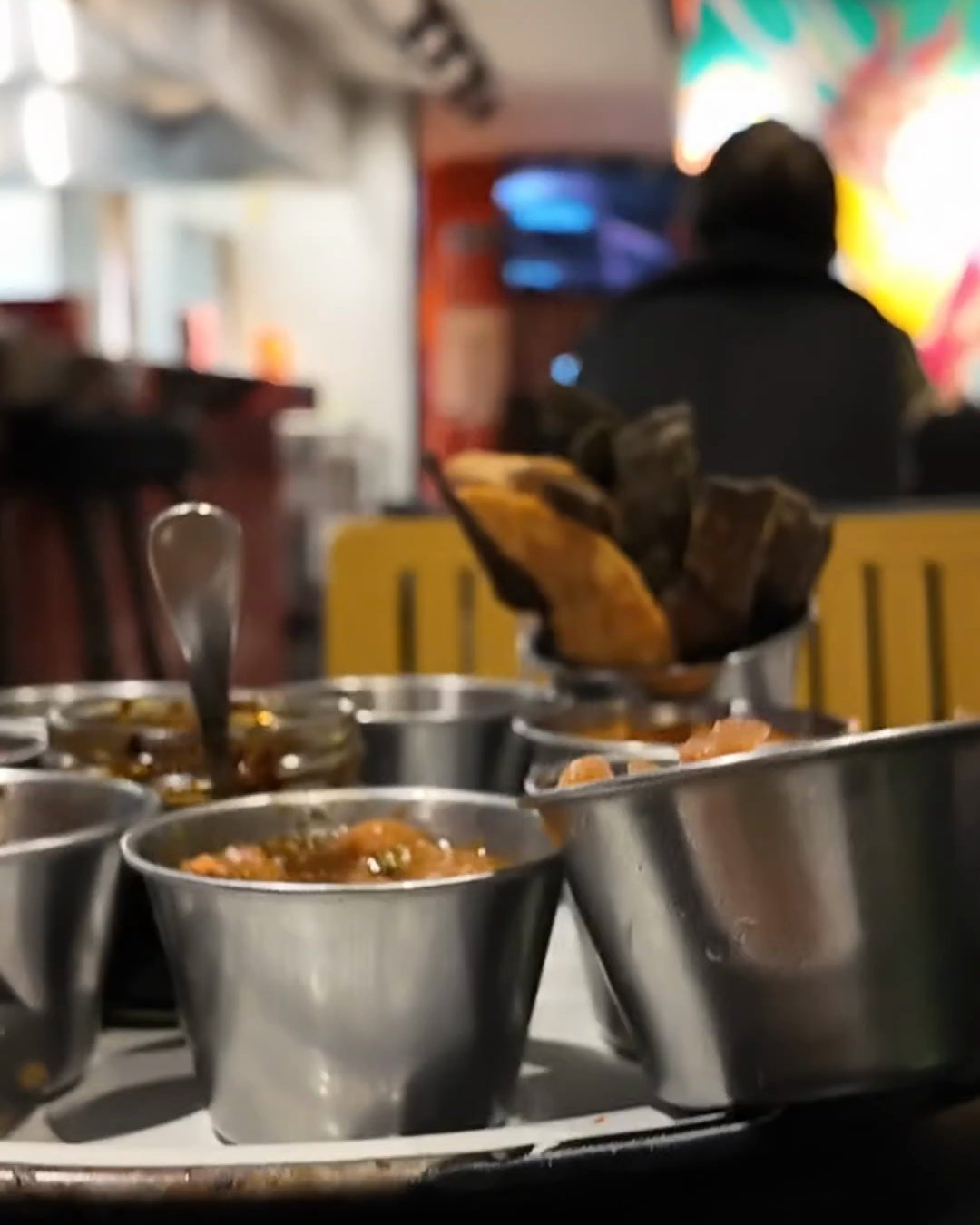
In the morning a waiter told me the three salsas in order. At night the salsas lined up in cups.
Visiting info
I was there on 5 October 2025. The history and dates were looked up while writing; the menu prices are what the signs said in that day's video. Hours and prices change, so treat them as a starting point.
📍 Taquería La Oriental · near the Zócalo, Puebla (exact branch not recorded)
- 🌮 On record: one taco árabe and one taco oriental with salsa, wrapped in paper to go. The menu said taco oriental 28 pesos, taco de harina 38 (October 2025). Check before you go.
- 🗺️ Map
📍 Heladería Delizzia Gourmet Centro · Puebla old town
- 🍨 On record: nieve (water and fresh fruit) and helado (milk) sold separately; nogada, carajillo and tamarindo on the chalkboard; paletas 25 and 30 pesos (October 2025). Check before you go.
- 🗺️ Map
📍 Biblioteca Palafoxiana · Puebla historic centre
- 📚 Known facts: founded in 1646 when Bishop Palafox y Mendoza donated about 5,000 books. Today's hall, a vaulted room about 43 m long, dates from 1773. Added to UNESCO's Memory of the World register in 2005.
- 🎟️ Tickets and hours: guides disagree. Check official info before visiting.
- 🗺️ Map
📍 Puebla historic centre and Barrio del Artista
- 🏛️ Known facts: the city was founded in 1531 and its historic centre became a UNESCO World Heritage Site in 1987. In 2019 the Talavera craft of Puebla and Tlaxcala was inscribed, together with Spain's, on UNESCO's intangible heritage list.
- 🗺️ Map
📍 Xochimilco · south of Mexico City
- 🛶 Known facts: canals left between chinampas, fields built up on the old lake. Listed by UNESCO in 1987 together with Mexico City's historic centre.
- 🌙 Night boat: I was on the water after dark. Boat types, fares and night service: check before you go.
- 🗺️ Map
How to eat your way through with less fuss
- 🌶️ Ask about the salsa order. Mine went serrano, jalapeño, habanero. Start from the mild end.
- 🌯 Tacos árabes to go: "para llevar, en papel". The place I went only wrapped in paper; I carried the parcel in a plastic bag and ate in the car.
- 🫓 Harina means a different tortilla. I was told a taco de harina is the same meat with a different tortilla.
- 🍨 Nieve isn't helado. Nieve is water and fruit, helado is milk. The chalkboard I saw had a nogada flavour too.
- 🌰 Chile en nogada is seasonal. I was told it's a September dish. In early October, ask whether a restaurant still has it.
- 🌙 Get to Xochimilco before sunset. Most of my night-boat footage is too dark to make out.
Frequently asked questions
What is a taco árabe?
A taco said to have come to Puebla with Middle Eastern immigrants in the 1930s: marinated pork cooked on a vertical spit and wrapped in a thin flour bread.
How is a taco árabe different from a taco de harina?
At the taco place I went to, I was told they are the same thing and only the tortilla differs, the harina one being thinner.
What is the difference between nieve and helado?
At the Puebla shop I stopped at, nieve is made with water and fresh fruit and helado with milk. Both come in a small cup or a cone.
Jayden's verdict
Un árabe, un oriental, para llevar. What I brought back from Puebla was two tacos wrapped in paper.
- Highlights: three salsas told to me from mild to hot, a nieve chalkboard with nogada on it, tacos árabes unwrapped in the car
- Tip: tacos árabes travel well in paper. Catch chile en nogada before September's season ends.
The next morning I went for a run in Parque México. In Day 6, I order a tripa taco at a street corner stand, a word I'd only read on a banner three days earlier.
Mexico Travel Diary, Day by Day
- Day 1. From in-flight kimchi to taco talk in a midnight taxi
- Day 2. Balloon sunrise and breakfast in a cave
- Day 3. Night tacos under a pink tent
- Day 4. Chapultepec Castle and the park's snack lane
- Day 5. Tacos árabes in Puebla, and Xochimilco (you are here)
- Day 6. A tripa taco and the Gran Hotel terrace
- Day 7. Five minutes of agave and a tequila tasting
- Day 8. Caldo michi at the market, a first night in Guanajuato
- Day 9. Guanajuato mummies and LOS MILAGROS in San Miguel
- Day 10. The last day in Mexico City, and what I ate in ten days
The five-part summary, two days per post, is at Mexico for Tacos: 10 Days.
Planning the trip?
Find a place to stay in the cities from this trip, straight from here.
Search stays on AgodaAffiliate link: I may earn a small commission if you book, at no extra cost to you.
Connected reading
Posts tied to this one by series, direct links, topic hub or tags.
Series · Mexico Travel Diary, Day by Day · Part 5 of 10
All 10 parts →

Linked posts

Guanajuato to Mexico City Day 10: A Pink Taxi on the Last Day, and Everything I Ate in Ten Days
Mentions this post11 min

San Miguel de Allende Day Trip Day 09: Mummies in the Morning, a Plate and a Guitar at LOS MILAGROS
Mentions this post15 min

Guadalajara Market Day 08: Caldo Michi at San Juan de Dios, Then Ramen on My First Guanajuato Night
Mentions this post15 min
Topic hub · Travel
All 28 posts →
Bournemouth Travel 01: A Same-Day Ticket via Dubai, and Back to My Old Homestay
Europe 2023, part 1 of 8: a ticket bought on my last day at work15 min
Ubud Travel 03: Best Even in the Rain, a Coconut-Bowl Office and a Rice-Field Villa
Ubud in the rain, working remotely from a villa over the rice fields13 min

Ask DailySay
Continue Reading

Mexico City Tacos Day 06: A Daytime Tripa Taco, Shrimp Tacos on the Gran Hotel Terrace
Mexico travel diary, day 6. A daytime tripa taco at a corner stand, then shrimp tacos on the Gran Hotel terrace above the Zócalo.
Notes worth keeping.
Occasional updates about project management, AI, products, travel, and the things I’m building.
No spam — occasional notes only. See our Privacy.