Florence Travel 06: Four Skies in One Day, and a Rain-Soaked Pompeii and Positano
April 2023, the second half of Italy: from Florence's Duomo to a Guinness on Piazzale Michelangelo, a flooded Alexander Mosaic in Pompeii and a grey Positano.
Part 6 / 8
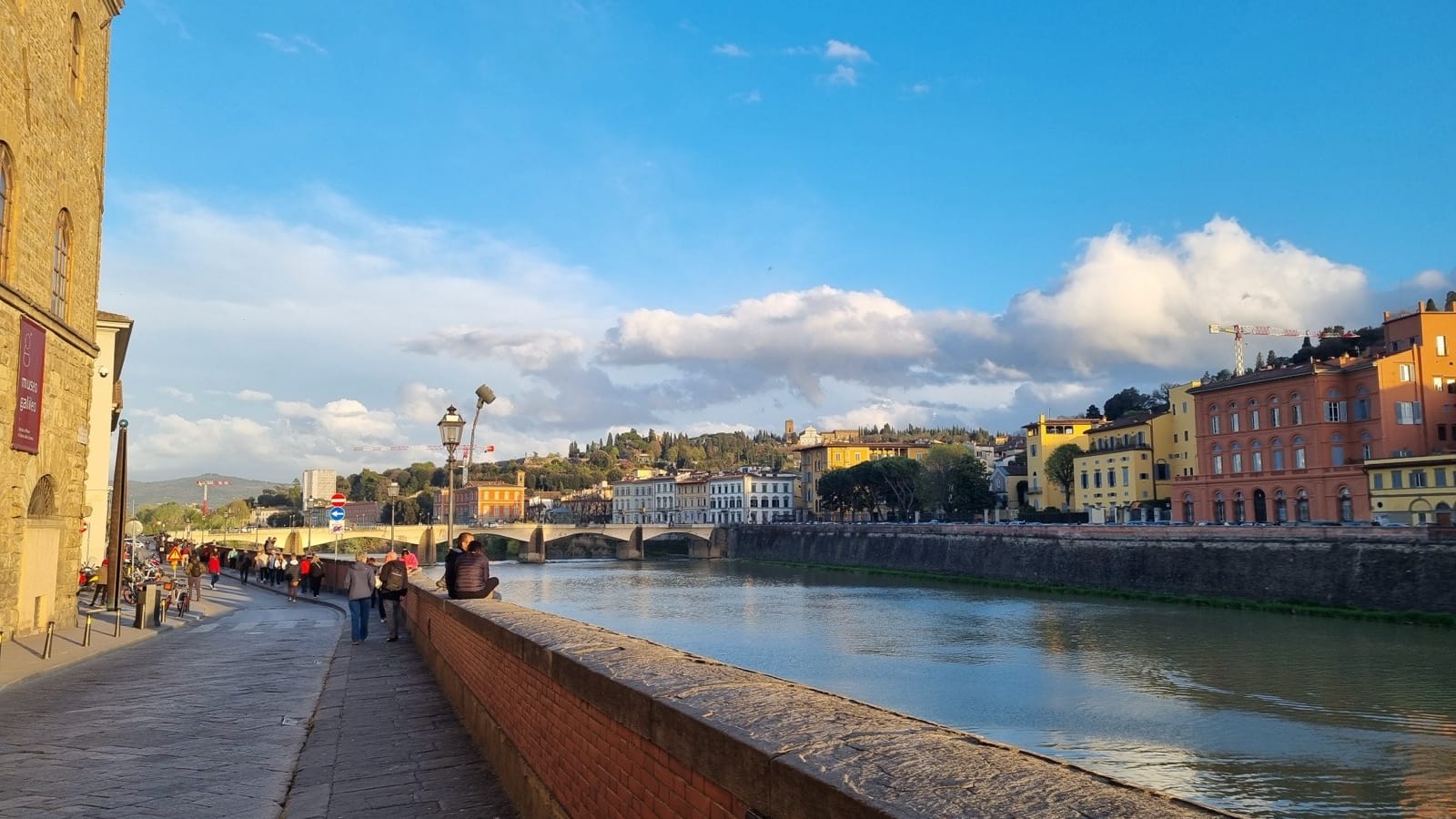
After Venice in Part 5 and a night at San Siro in Milan, I headed down to Florence on April 13. In one day in Florence, the sky changed four times: storm clouds over the Duomo, fluffy cumulus outside the café, clean blue over the Arno, deep navy up on the hill.
Three days later, Pompeii and Positano were rain from start to finish. That rain changed the direction of the trip; more on that at the end.
The route in this post
| Date | Where | In a line |
|---|---|---|
| Apr 13, afternoon | Florence: San Lorenzo → Duomo → Piazza della Repubblica | Old print shop, marble, Caffè Gilli |
| Apr 13, evening | The Arno → Piazzale Michelangelo → DALL'OSTE | Golden riverside, Guinness, David, steak |
| Apr 16, morning | Pompeii Archaeological Park | Puddles, "beware of the dog", the Alexander Mosaic |
| Apr 16, afternoon | Positano | Grey beach, lemon dessert, a Korean candy sign |
| After that | Rome | Heavy rain forecast for the whole week |
Florence: an old print shop on the way to the Duomo
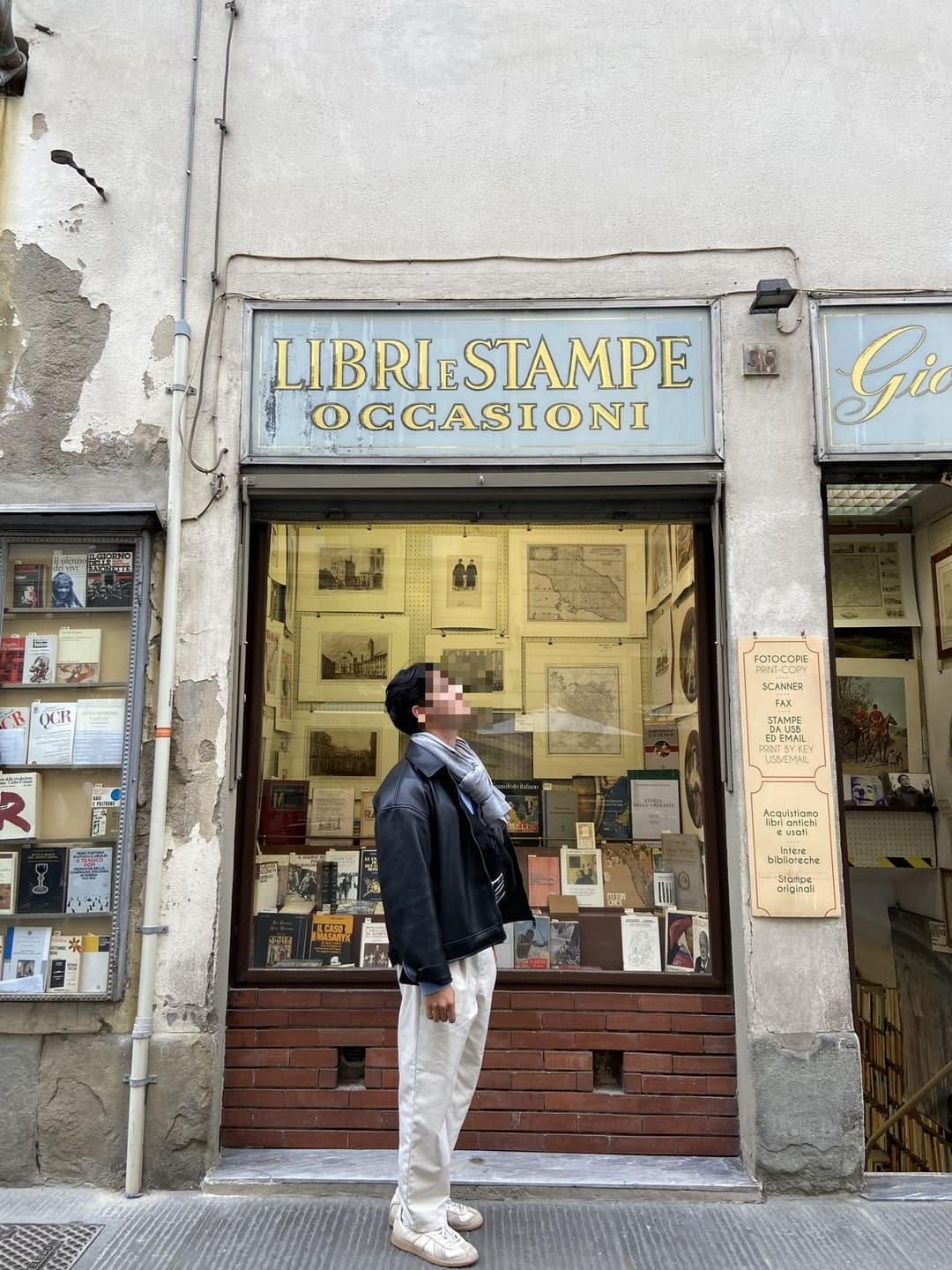
I started walking Florence at 5 p.m. near San Lorenzo. A late start, but the city's highlights sit on one easy line. The Duomo is about ten minutes away, and in those ten minutes I got stopped by a shop with gold lettering reading LIBRI e STAMPE, books and prints, its window crammed with old maps and copperplate engravings.
The Duomo, 600 years in one building
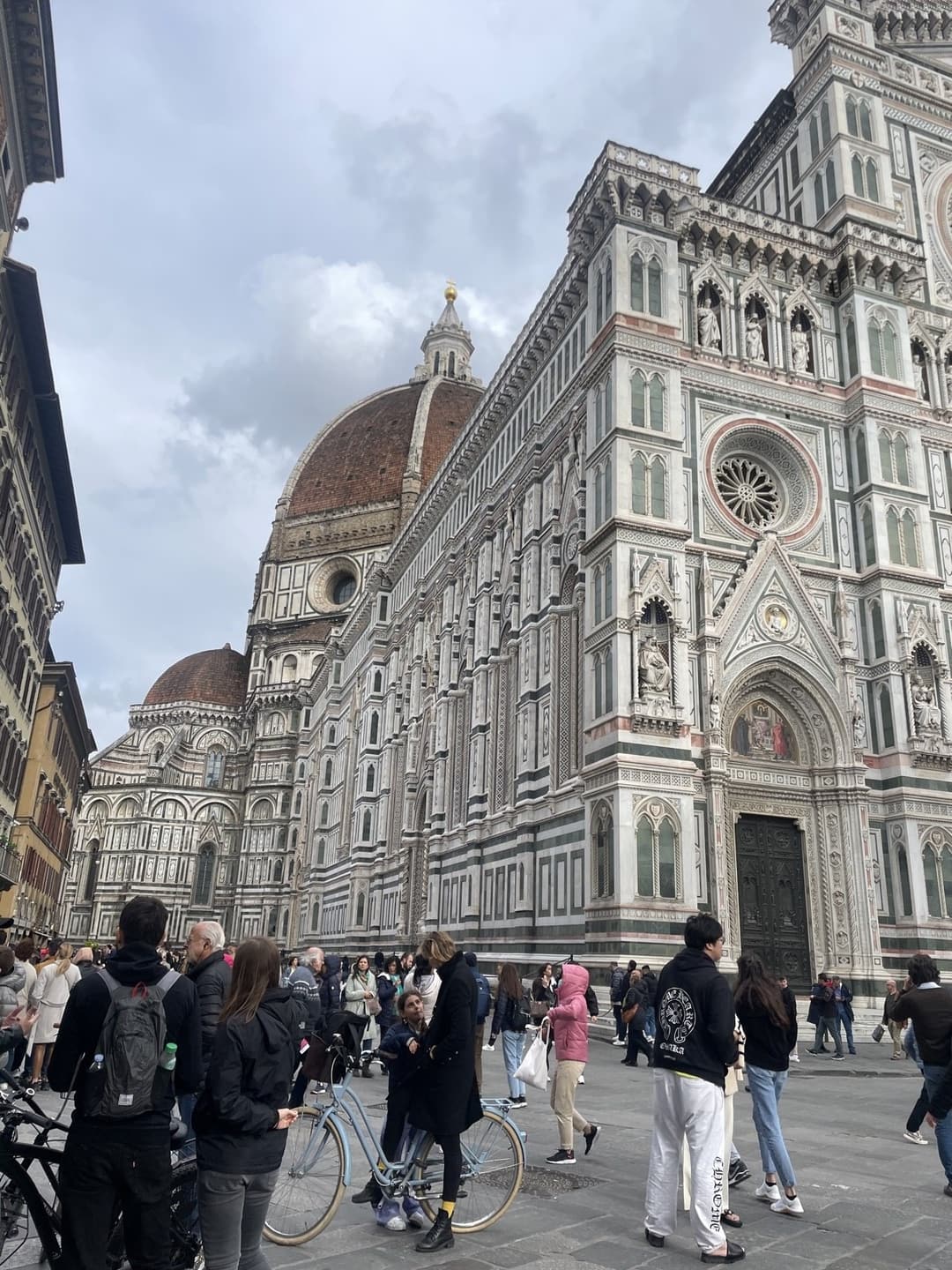
Walk into the square and the white, green and pink marble walls don't fit in one frame. Under the dark clouds, the marble looked even brighter. Santa Maria del Fiore had its first stone laid in 1296. Brunelleschi's dome went up between 1420 and 1436. Yet the ornate facade in front of you wasn't finished until 1887. That's roughly six centuries in one building, so it's worth looking at the dome and the facade separately.
When the sun slipped under the dome for a moment, I got my own photo in. A street artist's easel behind me was displaying a Mr. Bean caricature. Walk around the back and you get a completely different curve (part of it was under scaffolding that day), and to fit in Giotto's bell tower, listed at 85 metres, you have to back up to the far edge of the square. Give the loop fifteen minutes.
Caffè Gilli, an hour with a carousel
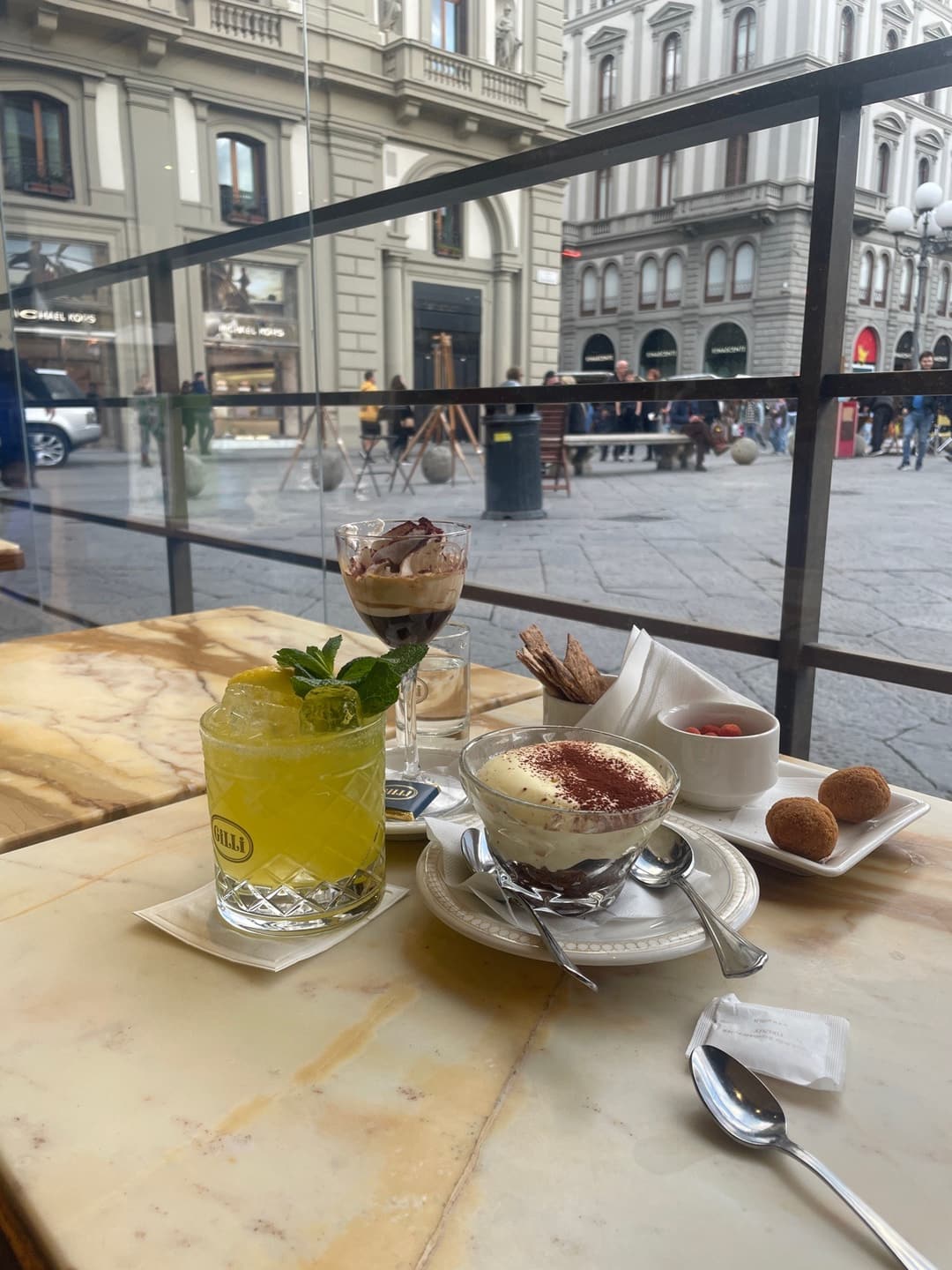
A few minutes south of the Duomo along the shopping streets is Piazza della Repubblica, with its carousel and a huge arch inscribed MDCCCXCV, 1895. I sat down at Caffè Gilli, a café said to have been started by the Swiss Gilli family in 1733.
With a yellow drink and a cocoa-dusted cream dessert in front of me, I watched the carousel turn beyond the glass railing while the sky switched to cumulus. I spent over an hour around here.
7:22 p.m., the Arno turns gold
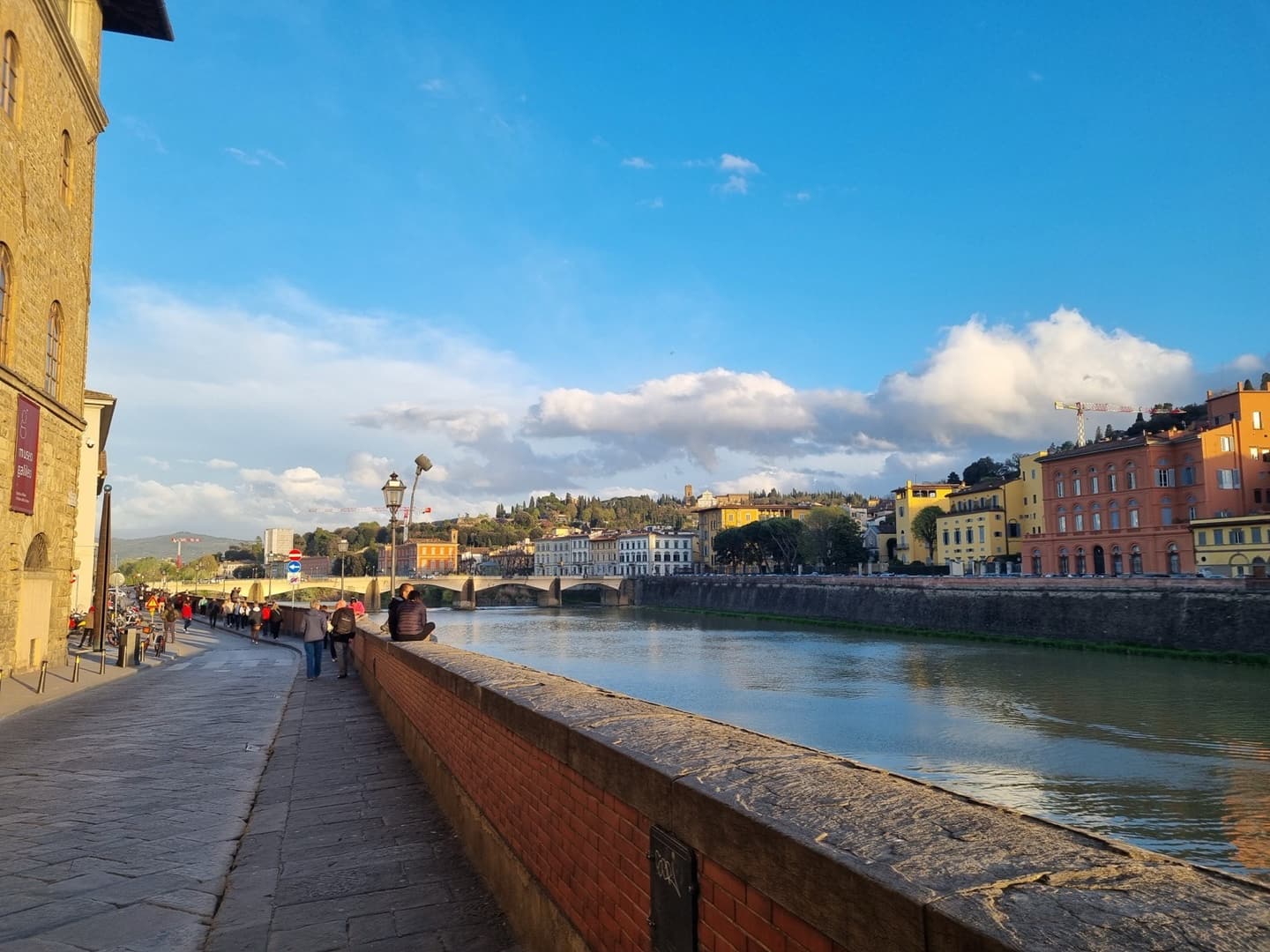
Past Piazza della Signoria and the Ponte Vecchio, at 7:22 p.m., I reached the Arno and the sky was a different colour again. Follow the river along the brick wall of the Galileo Museum and the buildings on the far bank are dipped in gold. It was the richest colour I saw that day.
A Guinness on Piazzale Michelangelo
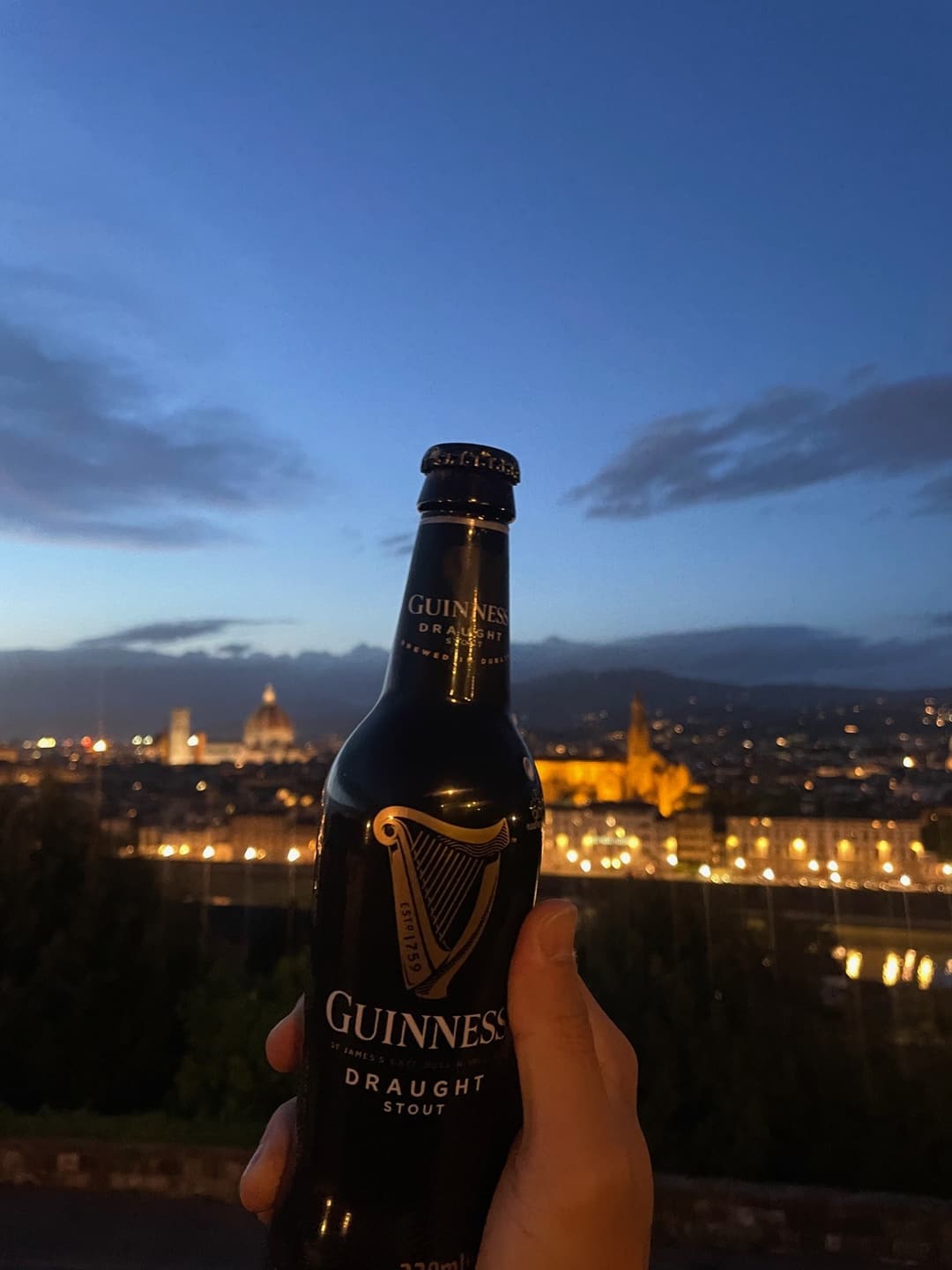
I reached Piazzale Michelangelo after sunset and raised a bottle as the city's lights came on one by one. Guinness in Italy, because I love the UK.
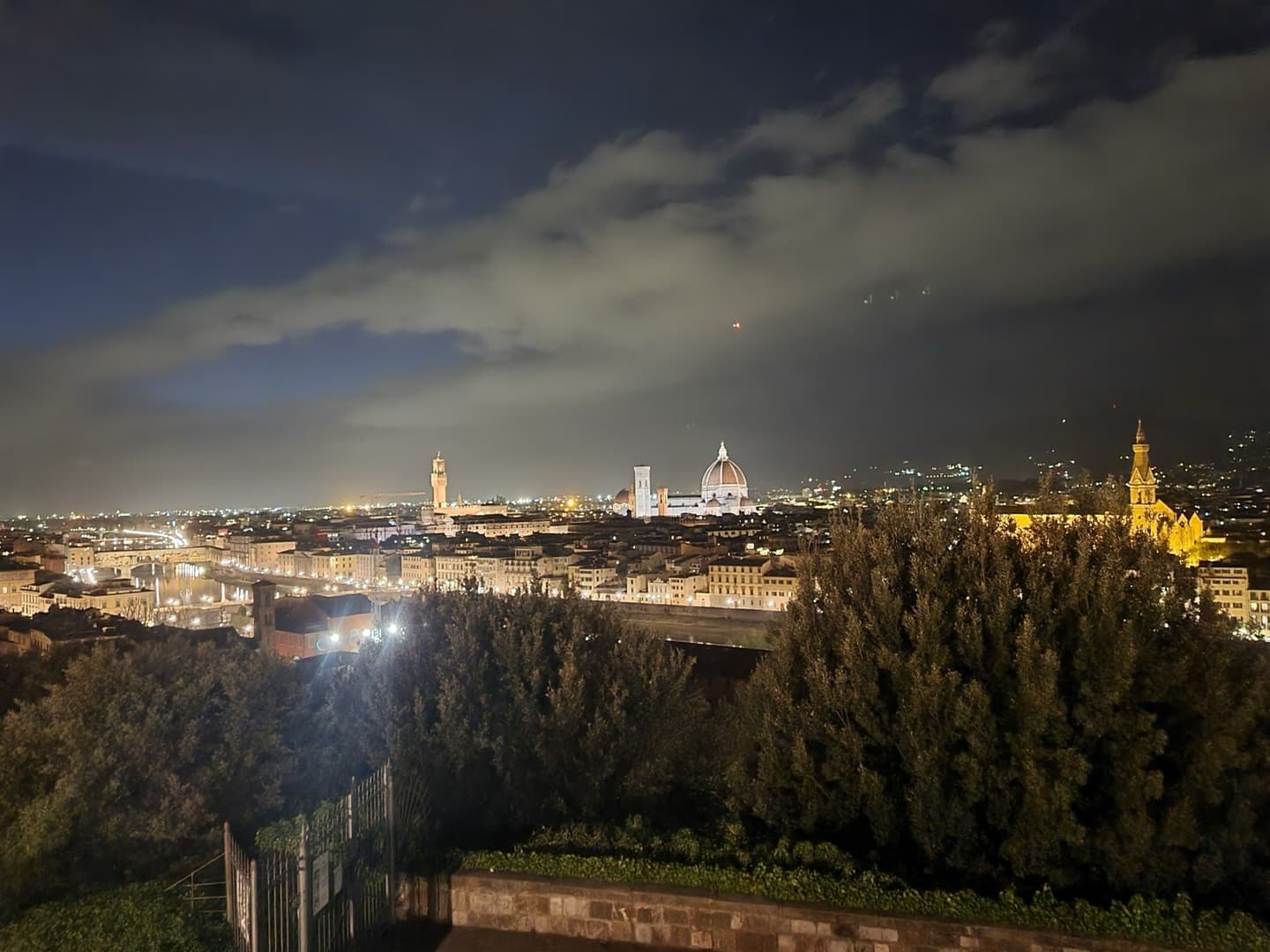
As it got darker, the Palazzo Vecchio tower, the Duomo and Santa Croce all fell into one line. The dome I had been looking up at a few hours earlier was now the size of my palm. A day in Florence ends with this view.
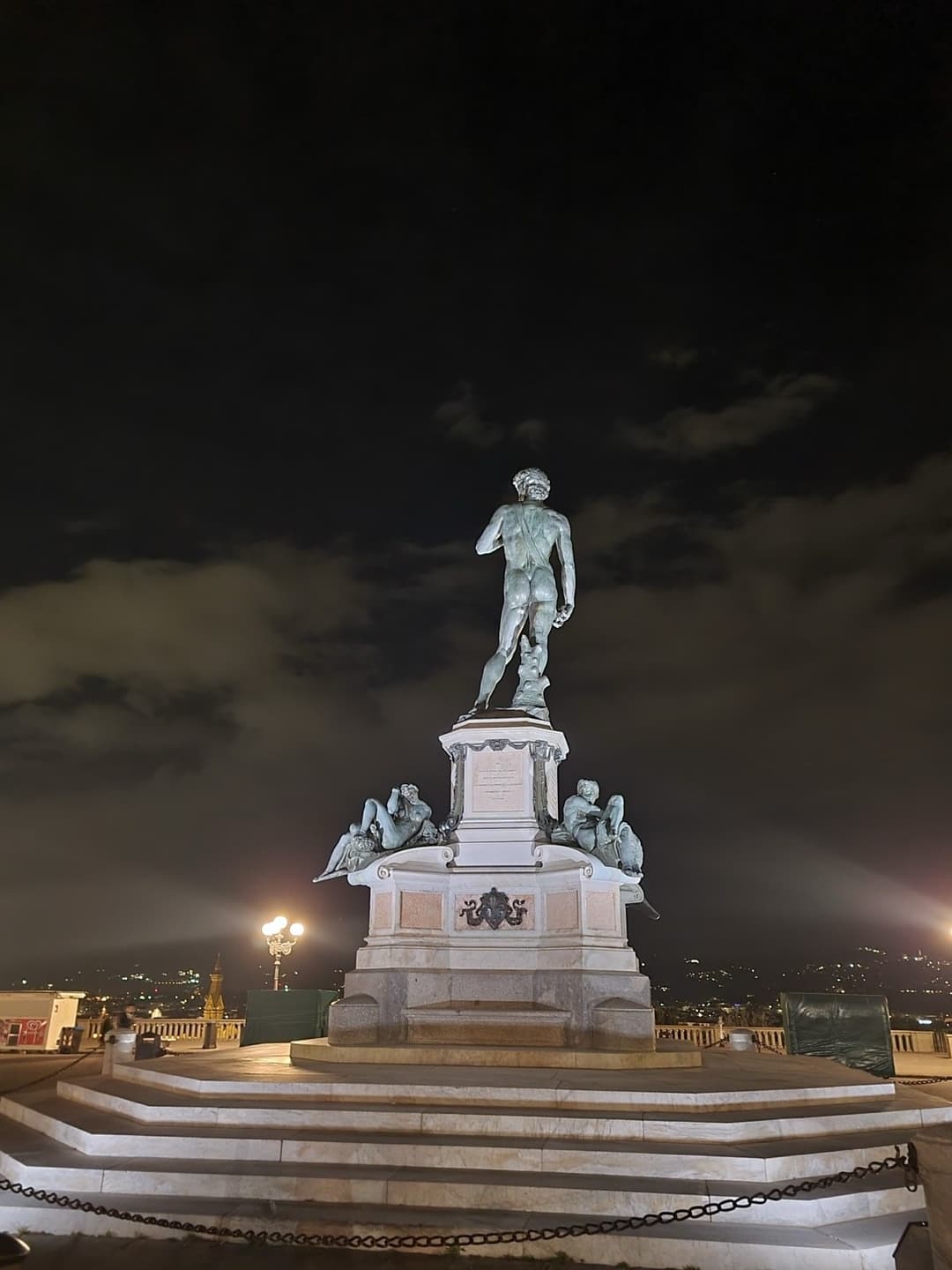
In the middle of the square, David stands looking over the city. It's not the original but the bronze copy installed when the piazzale was laid out in 1869. I was facing the night view, so my David photos are mostly from behind.
There are three ways up: bus, on foot, or the stairs (details in the info section below). In mid-April the sky was already deep blue after 8 p.m., so if you're after the sunset, go up earlier.
DALL'OSTE and a steak
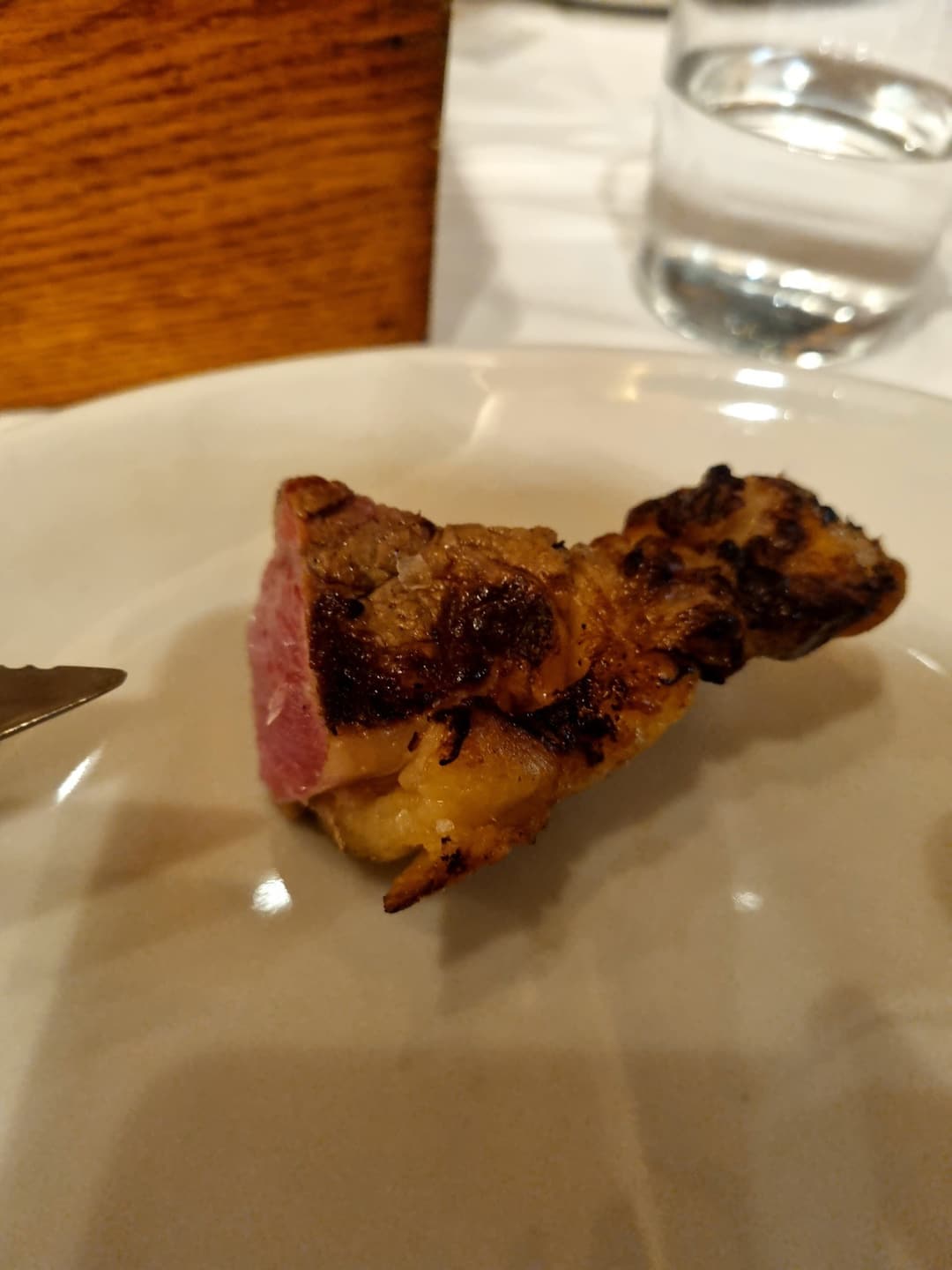
Dinner was at a place with DALL'OSTE printed on the tablecloths. The walls are covered in wooden wine-crate panels printed with winery names. The steak was charred dark on the outside and pink inside, with grains of salt on top.
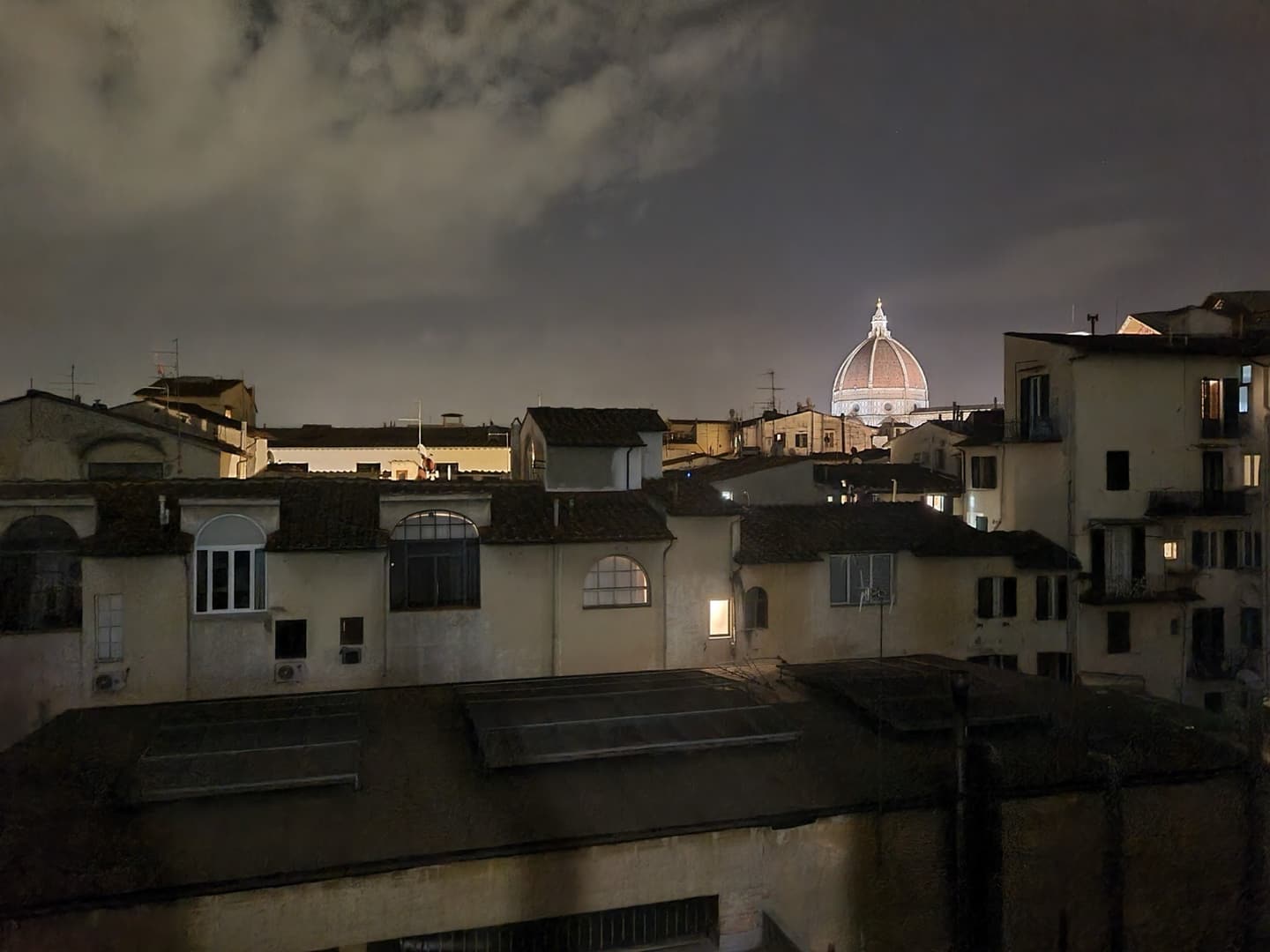
At 11:19 p.m., only the lit top of the dome showed over the rooftops. That was my day in Florence.
Pompeii: ruins in the rain
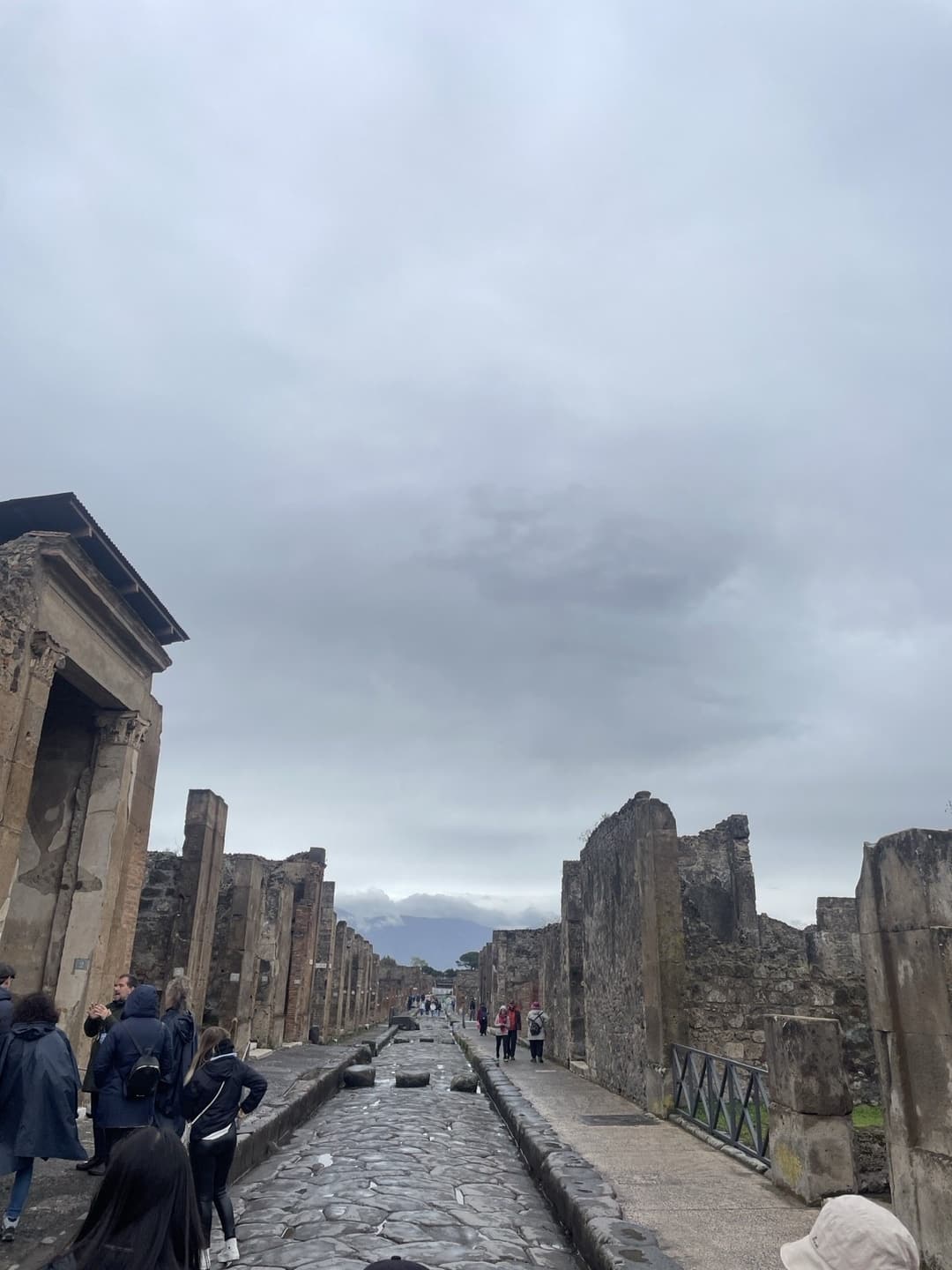
Pompeii on April 16 was full of puddles from the rain: in front of the Forum's columns, beside a 2,000-year-old bar counter, even on top of Alexander the Great's battle scene. This is the city Vesuvius buried in AD 79, and the mountain shows faintly under the clouds at the end of the street.
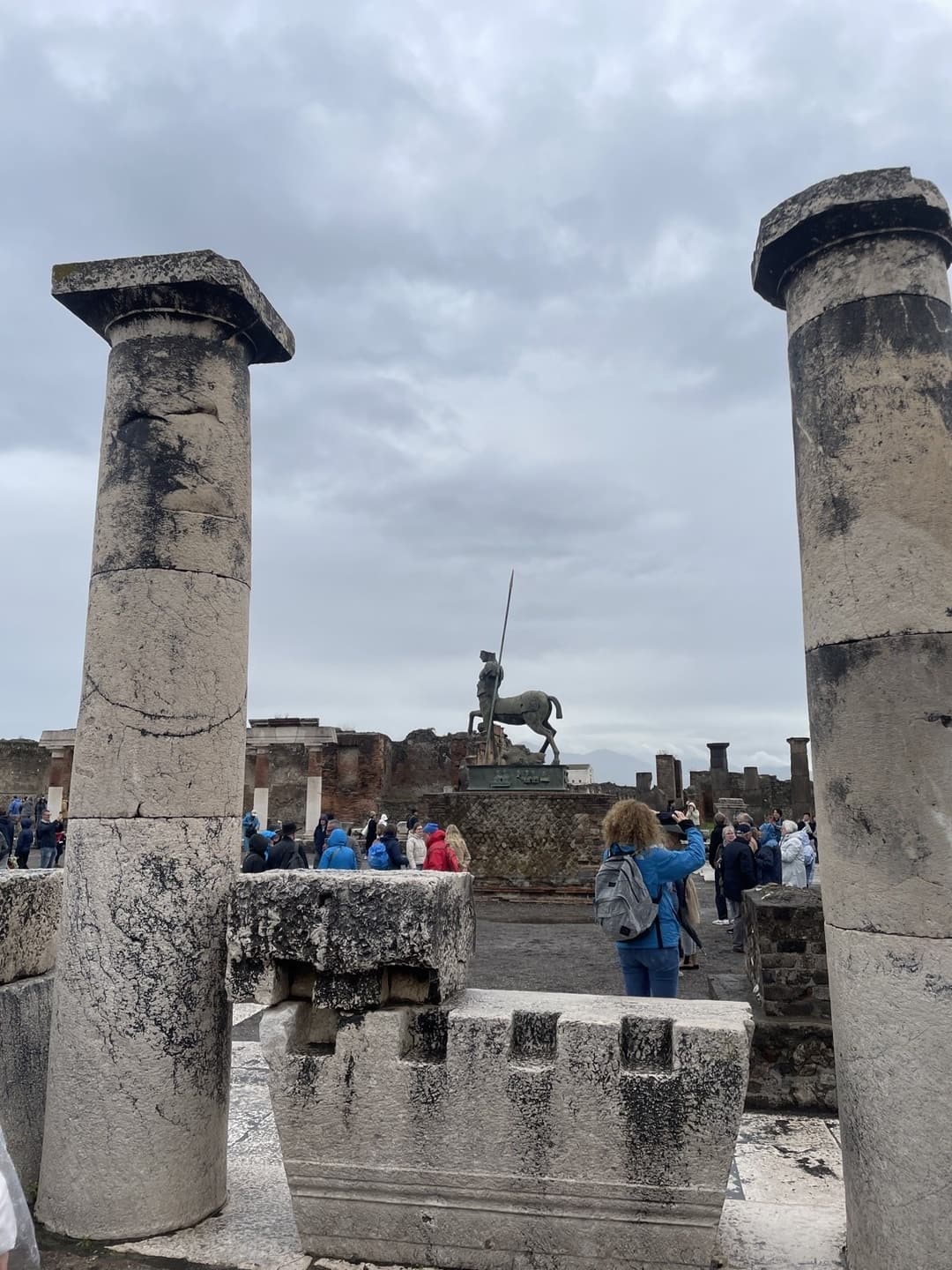
In the Forum, once the city's main square, stands a bronze centaur. It looks like an ancient find, but it's by the Polish sculptor Igor Mitoraj and arrived for a 2016 exhibition. Nearby, brick columns reflected in the puddles so you see each one twice.
A Roman snack bar and "beware of the dog"
The counter made of pieced-together stone is a thermopolium, an ancient street-food shop. Jars set into the counter held food and drink.
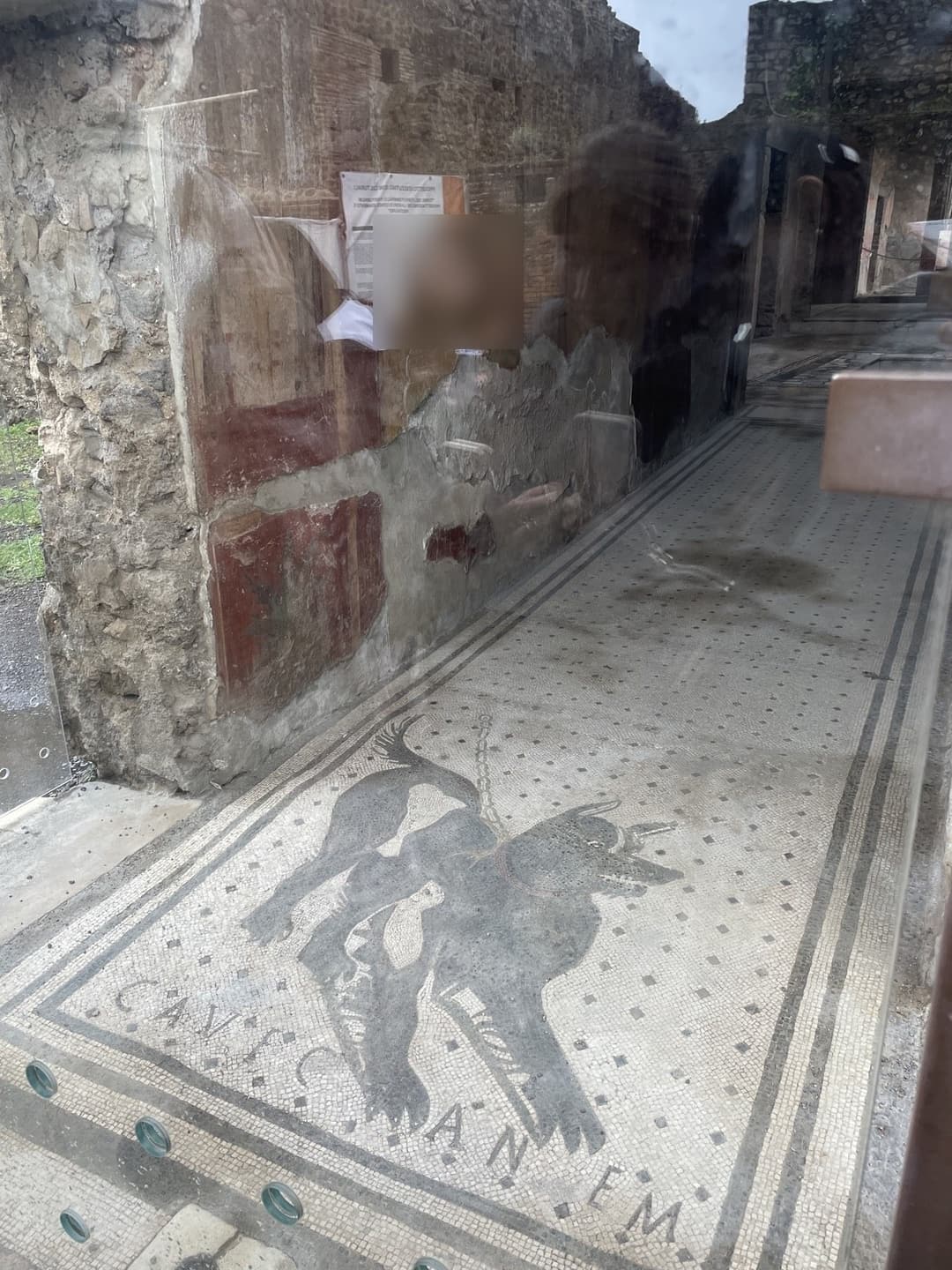
Behind glass on the floor, a dog guards the entrance to the House of the Tragic Poet: a chained mosaic dog baring its teeth, and below it CAVE CANEM, "beware of the dog".
Alexander under the rain
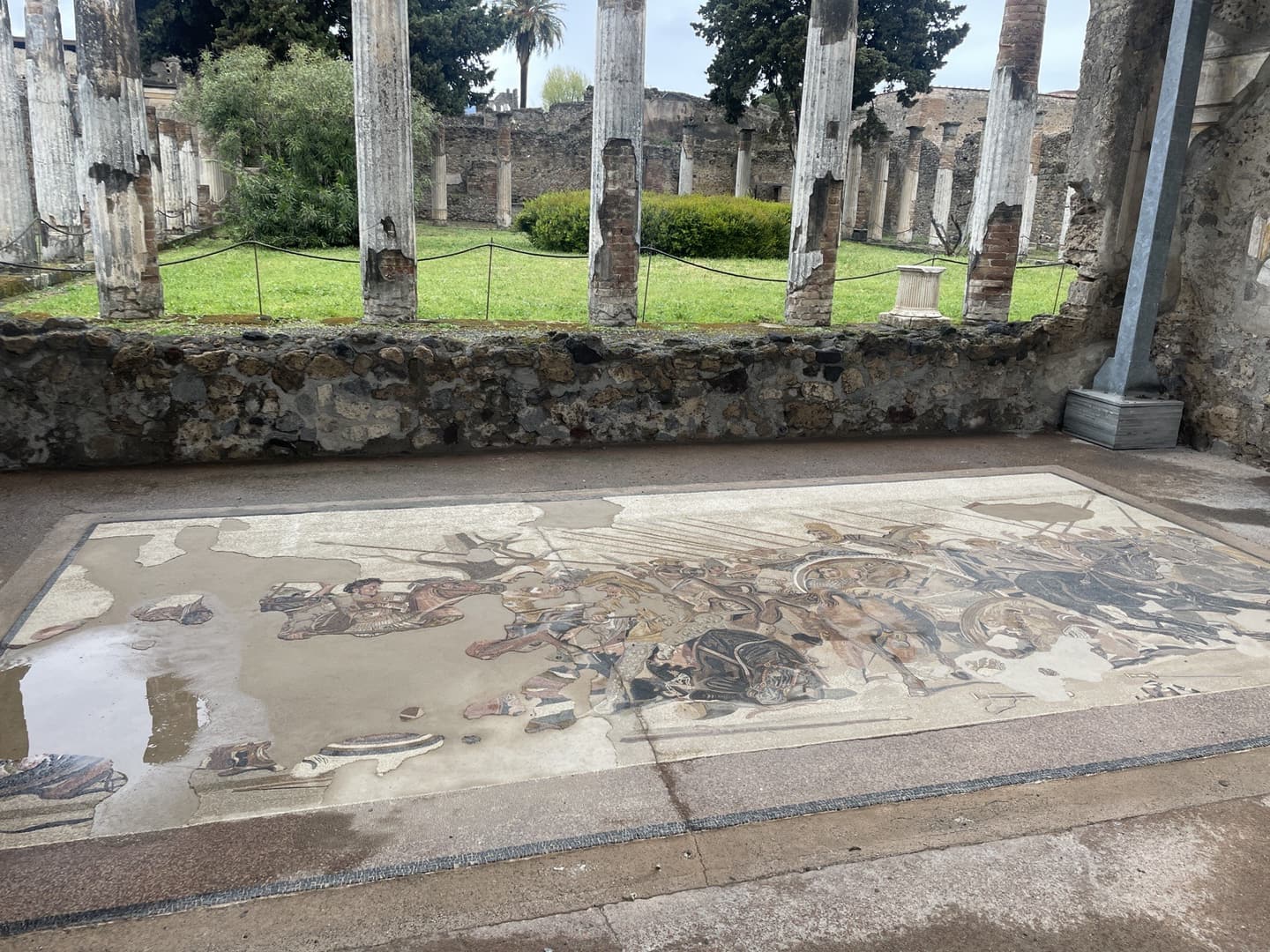
At the House of the Faun, the bronze statue that gives the house its name stands in a basin full of rainwater. The Alexander Mosaic on the floor inside was even more dramatic: water had pooled over the battle against Darius III, and the horses and soldiers glistened, soaking wet.
The statue and mosaic in the house today are copies; both originals are in the National Archaeological Museum of Naples.
There's also a millstone carved from volcanic rock. Pompeii had at least 31 bakeries with ovens and mills.
Plaster casts and the Stabian Baths
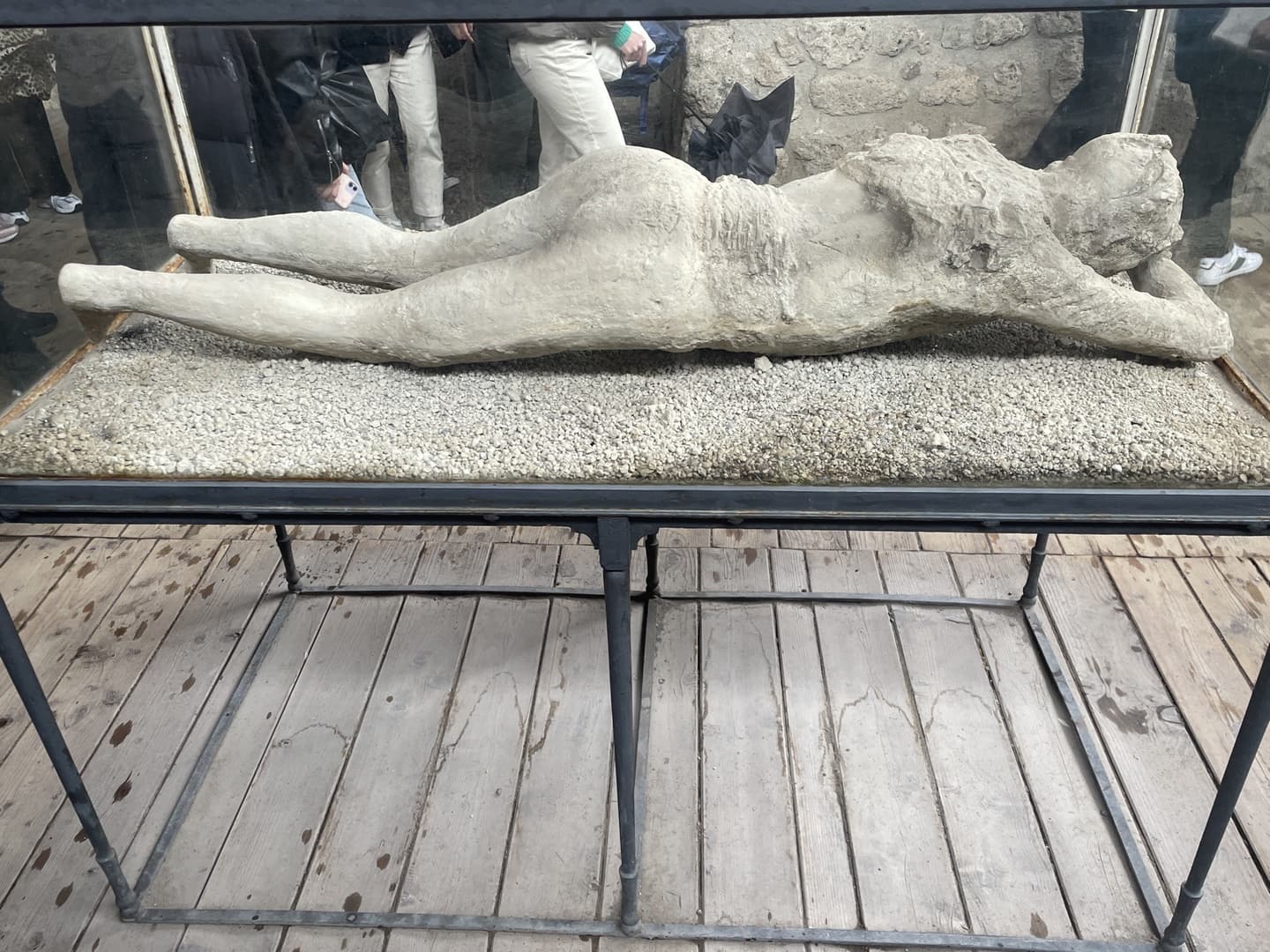
A plaster cast in a glass case: plaster poured into the hollow a body left in the ash, bringing a person from that day back into view. The method was devised by Giuseppe Fiorelli in 1863. The arm drawn up toward the face is still there. What I had been walking through was somebody's neighbourhood.
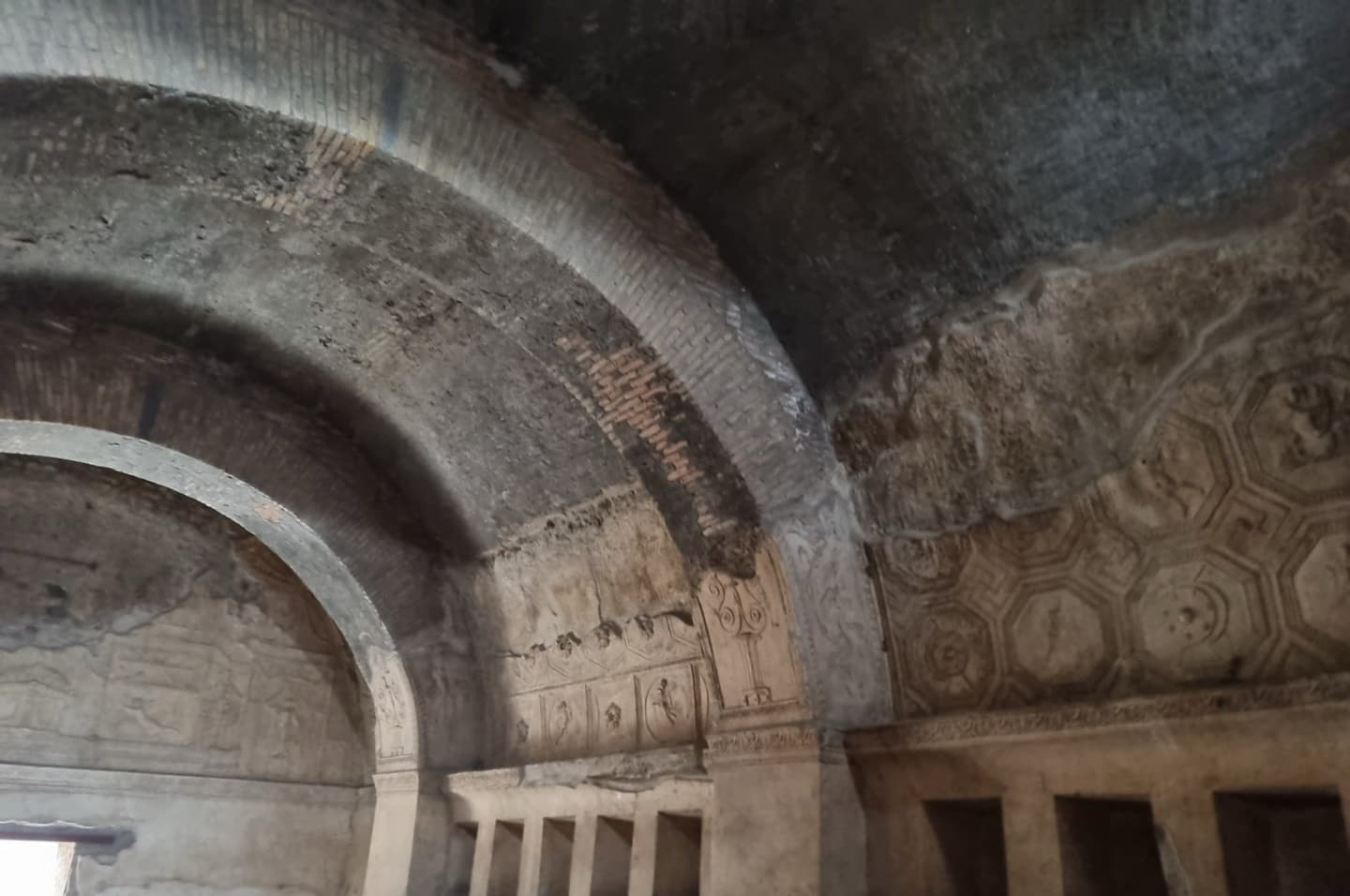
In the Stabian Baths, look at the ceiling first. The octagonal stucco pattern from two millennia ago is still there, and the walls are lined with niches. In the next room, with its floor lifted away, hot air once circulated between stacks of brick to heat the space. It's counted among the earliest surviving examples of underfloor heating in the Roman world.
Outside the colonnade, pink and blue raincoats filed past. I made it as far as the stone seats of the Large Theatre, but a whole morning of walking covered only part of the site. Lunch was outside the ruins: spaghetti in tomato sauce, then fried squid and prawns with a lettuce salad.
Positano: grey and lemon instead of blue
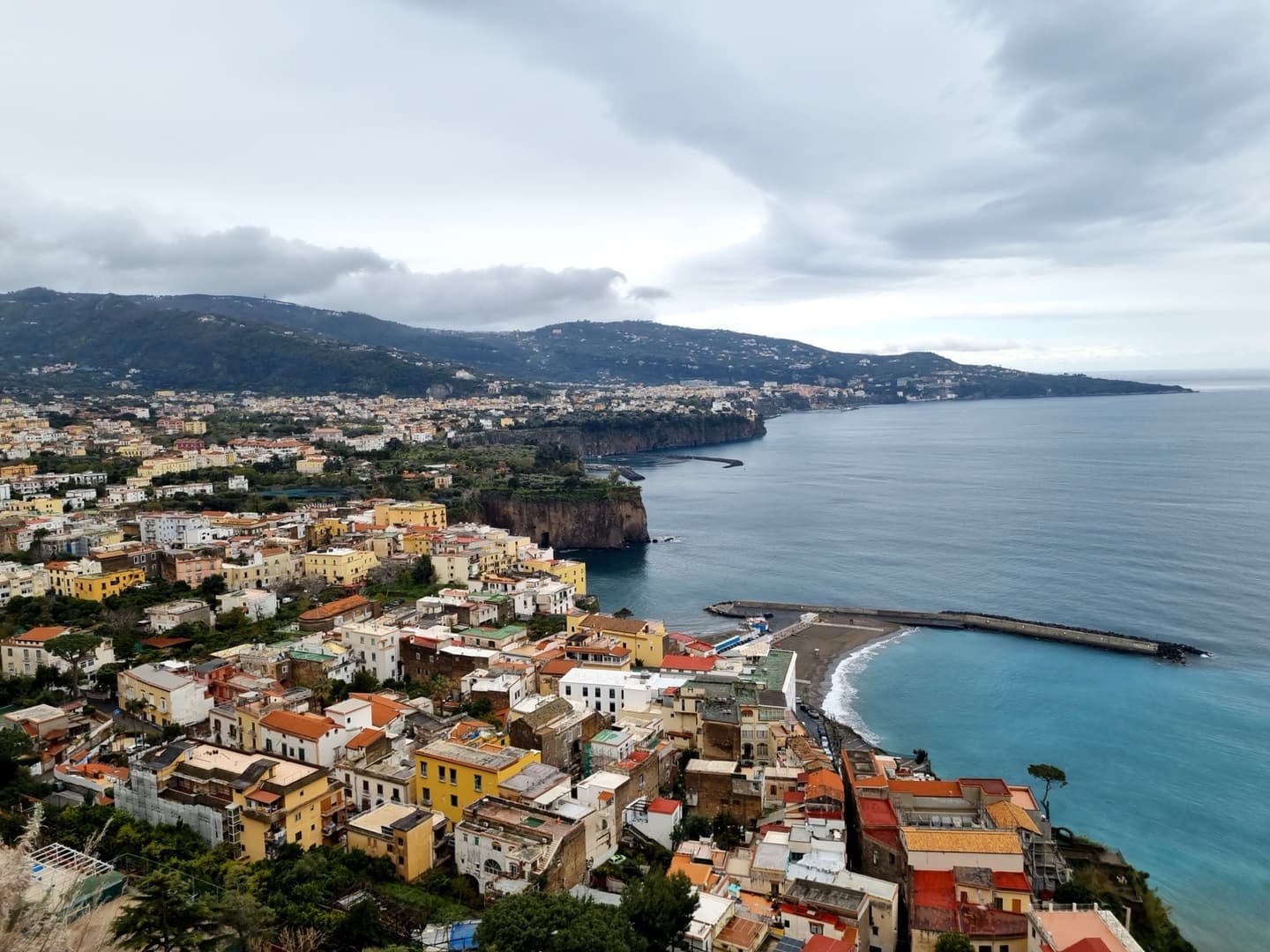
Say "Positano" and most people picture a blue sea. Positano that same afternoon was grey. Even the coastal viewpoint on the way in was under low cloud. The village itself is all stairs and clothing shops, and the steps beside a shop full of lemon-yellow dresses still show the raindrops. Outside one souvenir shop hung a South Korean flag.
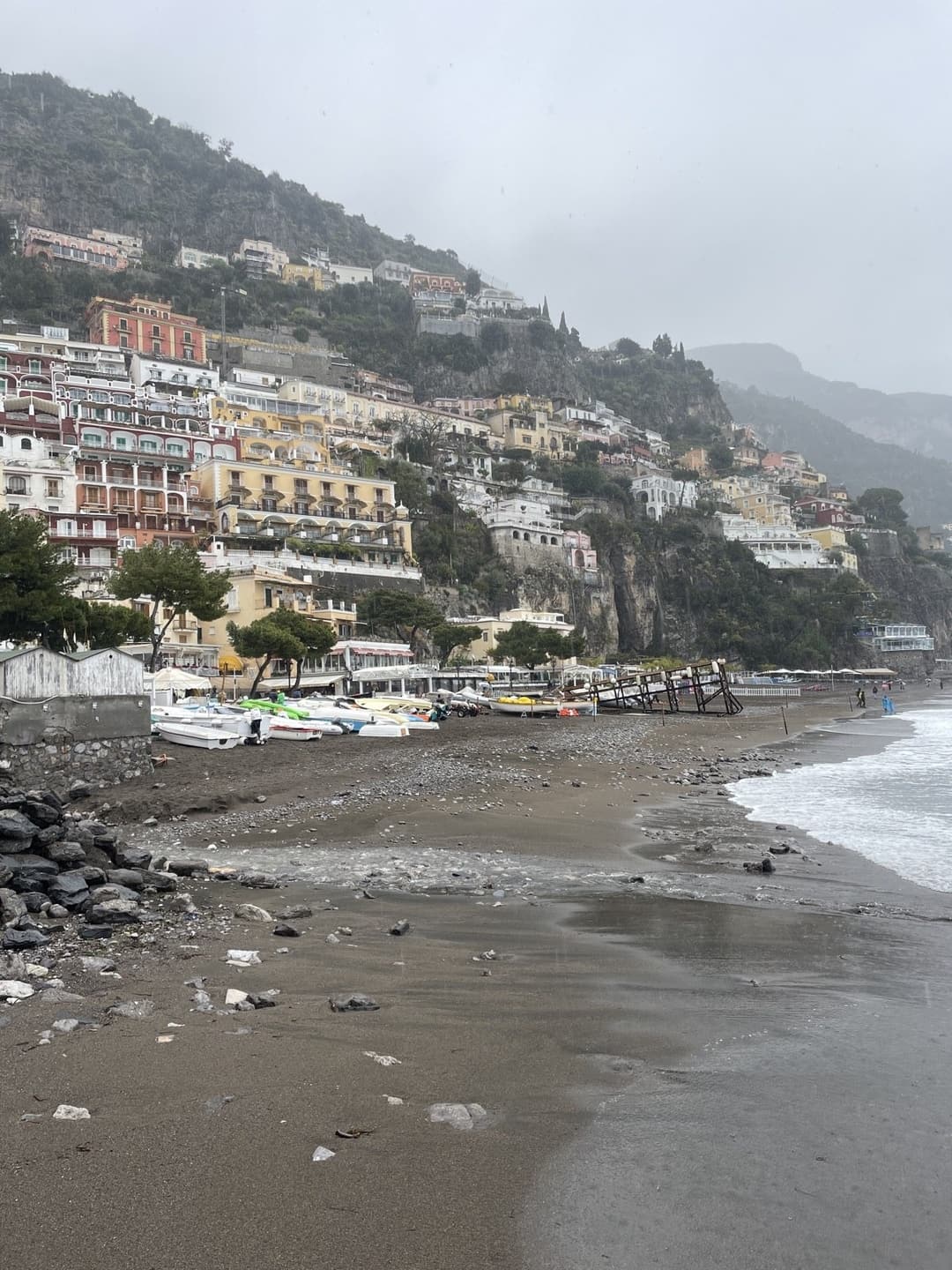
The beach was dark grey sand, with boats pulled ashore where the parasols should be. With nobody around, you can see better how the village clings to the cliff. The terrace chairs sat empty and wet.
The star of the day: a dessert in a lemon
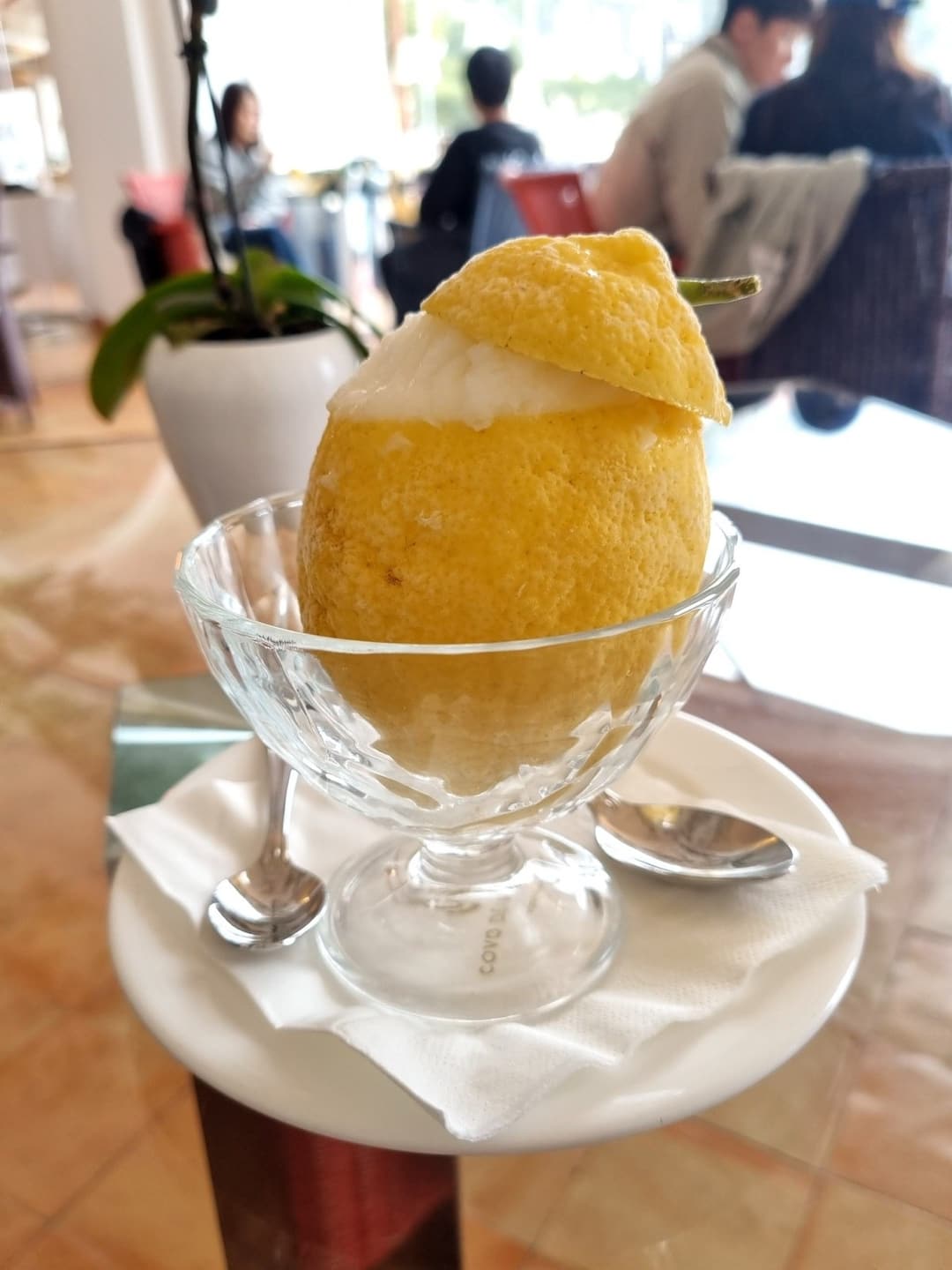
The star of the day was this dessert. A real lemon peel is the bowl, its sliced-off top perched on like a hat, with a pale filling peeking out underneath. The glass next to it held an amber drink with lemon slices floating between the ice cubes.
Right above the beach, the Church of Santa Maria Assunta has the majolica dome you see in every Positano photo, but I stood so close to the facade that the dome didn't make it into my shots. Inside, white walls and gold decoration glow, and the small painting above the altar is the Black Madonna, said to be in 13th-century Byzantine style. It's a good place to shelter from the rain, too.
A lemon candy "you won't find at Olive Young"
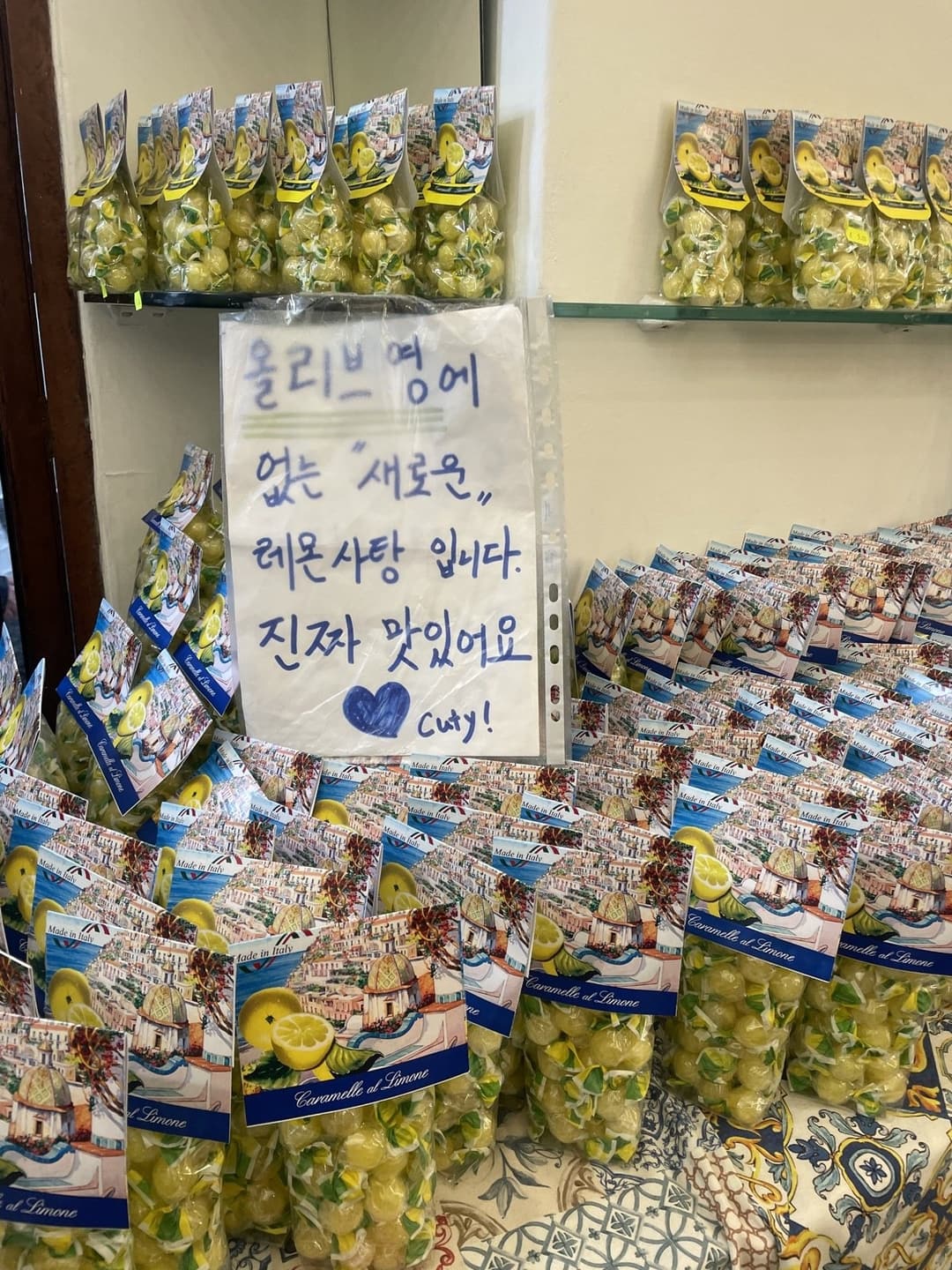
The funniest thing that day was a candy shop. On a heap of lemon candy bags sits a handwritten sign in Korean: "A 'new' lemon candy you won't find at Olive Young," then "It's really good," a heart, and a "Cuty!" signature. (Olive Young is Korea's ubiquitous health-and-beauty chain.) They must get a lot of Korean customers.
On the shelf next to it, limoncello bottles labelled Saluti da Positano stand in rows. Positano is part of the Amalfi Coast lemon-growing area that received a protected geographical indication (IGP) in 2001, which is why the souvenirs here are all yellow.
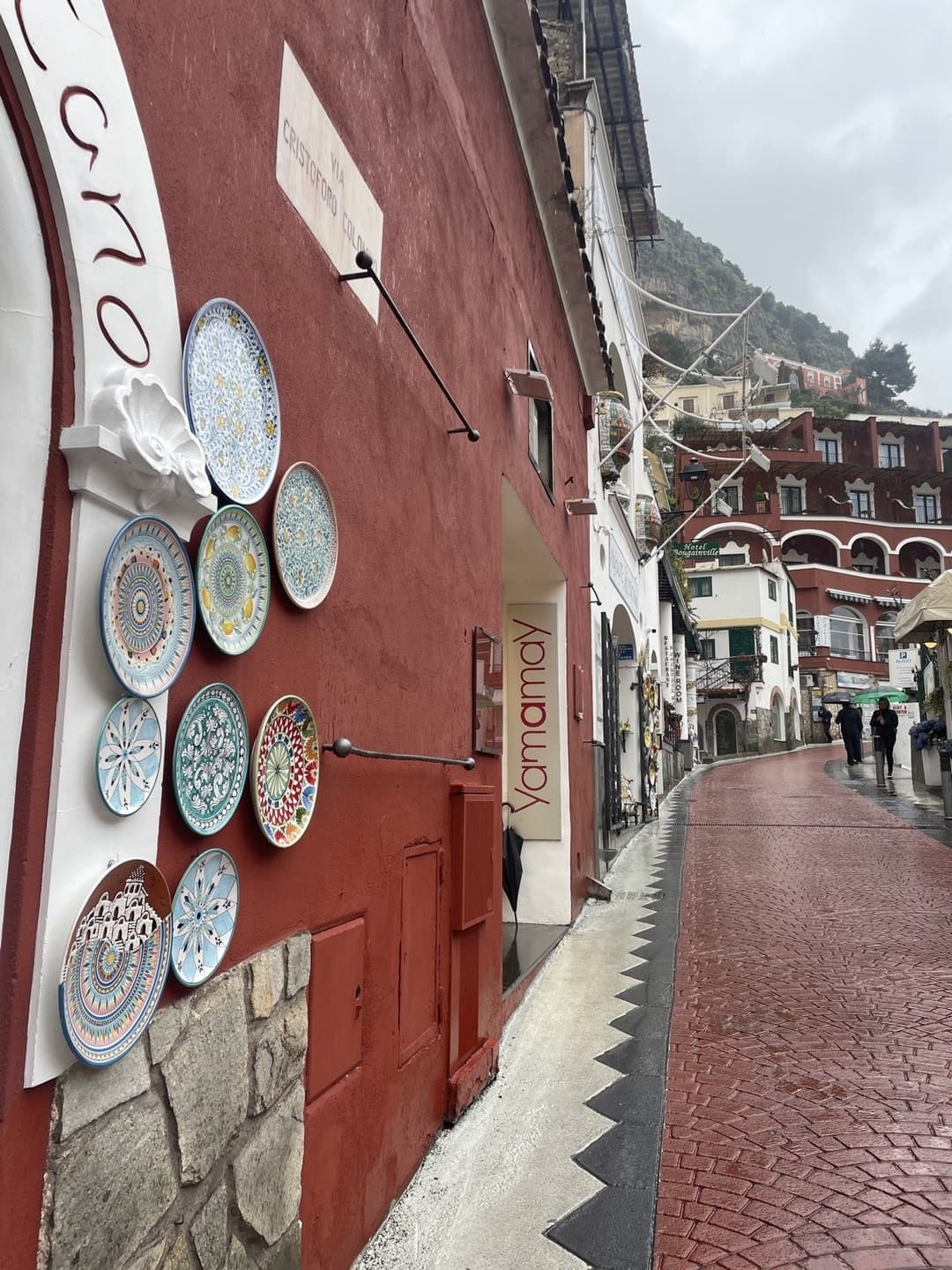
Under the VIA CRISTOFORO COLOMBO sign, the rain-soaked brick street gleamed the same red as the wall. When I left Positano, the clouds hung halfway down the mountains. I never saw a blue Positano.
And then Rome, with a week of rain
I spent a full day getting soaked in Pompeii and Positano. Italy was still great. Italy was the best country of the whole trip.
The problem came next. I got to Rome, opened the forecast, and saw heavy rain for the entire week. I couldn't spend the rest of the trip in the rain.
So, sitting in Rome, I searched for a country with no rain at all. I'd just quit my job, so the itinerary was mine to change. Where I went is the next part.
Visiting info
📍 Florence Cathedral (Santa Maria del Fiore) · Piazza del Duomo, Florence
- 📸 Photos: to get the facade, the curved back and Giotto's bell tower (listed at 85 m), allow 15 minutes for a full loop.
- ☕ Caffè Gilli: on Piazza della Repubblica. The seats by the glass railing look out on the carousel. Google Maps
- 🗺️ Map: Open in Google Maps
📍 Piazzale Michelangelo · Florence
- 🚌 Bus: lines 12 and 13. Line 13 is listed as leaving from Lungarno degli Archibusieri by the Uffizi, about 15 minutes, every 20 minutes. Check stops and last buses again before you ride.
- 🚶 On foot: listed as 20–30 minutes from the centre, though some say 45 from the Ponte Vecchio. It's uphill all the way.
- 🪜 Stairs: the Rampe del Poggi from Piazza Poggi, designed by Giuseppe Poggi in the late 19th century, climbing past fountains and an artificial grotto.
- 🗺️ Map: Open in Google Maps
📍 Pompeii Archaeological Park · Porta Marina entrance, Pompei (near Naples)
- 🚆 Getting there: Pompei Scavi – Villa dei Misteri station on the Circumvesuviana line, closest to the Porta Marina entrance.
- ⏰ Hours: 9:00–19:00 (last entry 17:30); in winter 9:00–17:00 (last entry 15:30). Sources disagree on the season dates, so check the official site. Closed January 1 and December 25.
- 🎟️ Tickets: €20–22 depending on the source; confirm on the official site before you go.
- 🏛️ For the originals: the House of the Faun's bronze and the Alexander Mosaic are in the National Archaeological Museum of Naples.
- 🗺️ Map: Open in Google Maps
📍 Positano · Province of Salerno, Amalfi Coast
- 🚌 Getting there: no train station in the village. Take the train to Sorrento, then a SITA bus or a ferry.
- 🚗 Driving: parking is scarce, and many guides advise against driving.
- ⛪ Santa Maria Assunta: to get the majolica dome in the shot, step well back from the facade. I couldn't confirm the church's opening hours.
- 🗺️ Map: Open in Google Maps
How to stay a little drier
- 🌅 Shoot Piazzale Michelangelo twice. Dusk and full dark look completely different.
- 👟 Wear waterproof shoes in Pompeii and Positano. Pompeii's streets collect puddles everywhere, and Positano's many steps get slick in the rain.
- 🕔 You can start Florence late. I set off at 5 p.m. and reached Piazzale Michelangelo around 8.
Jayden's verdict
Florence under four skies, Pompeii and Positano wet all day. Italy was great even in the rain. I want to go again.
- Highlight: Florence at night from Piazzale Michelangelo, the Alexander Mosaic under rainwater in Pompeii, and the lemon-peel dessert in Positano
- Would I go back?: Yes. Italy is the country I want to go back to.
- Tip: in Florence, a 5 p.m. start still gets you from the Duomo to the night view. Wear waterproof shoes for Pompeii and Positano.
- Pair it with: the National Archaeological Museum of Naples, home of Pompeii's original mosaic and bronze
The next part is Sharm El Sheikh in Egypt, where I flew to get away from Rome's week of rain.
19 Days After Quitting series
- The UK, part 1: via Dubai, back to my Bournemouth homestay
- The UK, part 2: a day in London, from Big Ben to a Soho pub
- France: Nice and Saint-Paul-de-Vence
- Italy, part 1: Milan's Duomo and San Siro
- Italy, part 2: Venice, San Giorgio and Burano
- Italy, part 3: Florence, Pompeii and Positano (you are here)
- Egypt: Escaping the rain to Sharm El Sheikh
- Rome again: Italian food and the way home
Connected reading
Posts tied to this one by series, direct links, topic hub or tags.
Series · 19 Days After Quitting: The UK, France, Italy and Egypt · Part 6 of 8
All 8 parts →

Linked posts

Rome Travel 08: Rome Again, Everything I Ate in Italy, and Home via Taipei
Mentions this post15 min

Milan Travel 04: From the Duomo on Easter Morning to 74,742 Fans at San Siro, Visited Twice
Mentions this post17 min

Nice, France Travel 03: Three Trips to the Same Beach, and Chagall's Saint-Paul-de-Vence
Mentions this post13 min
Topic hub · Travel
All 18 posts →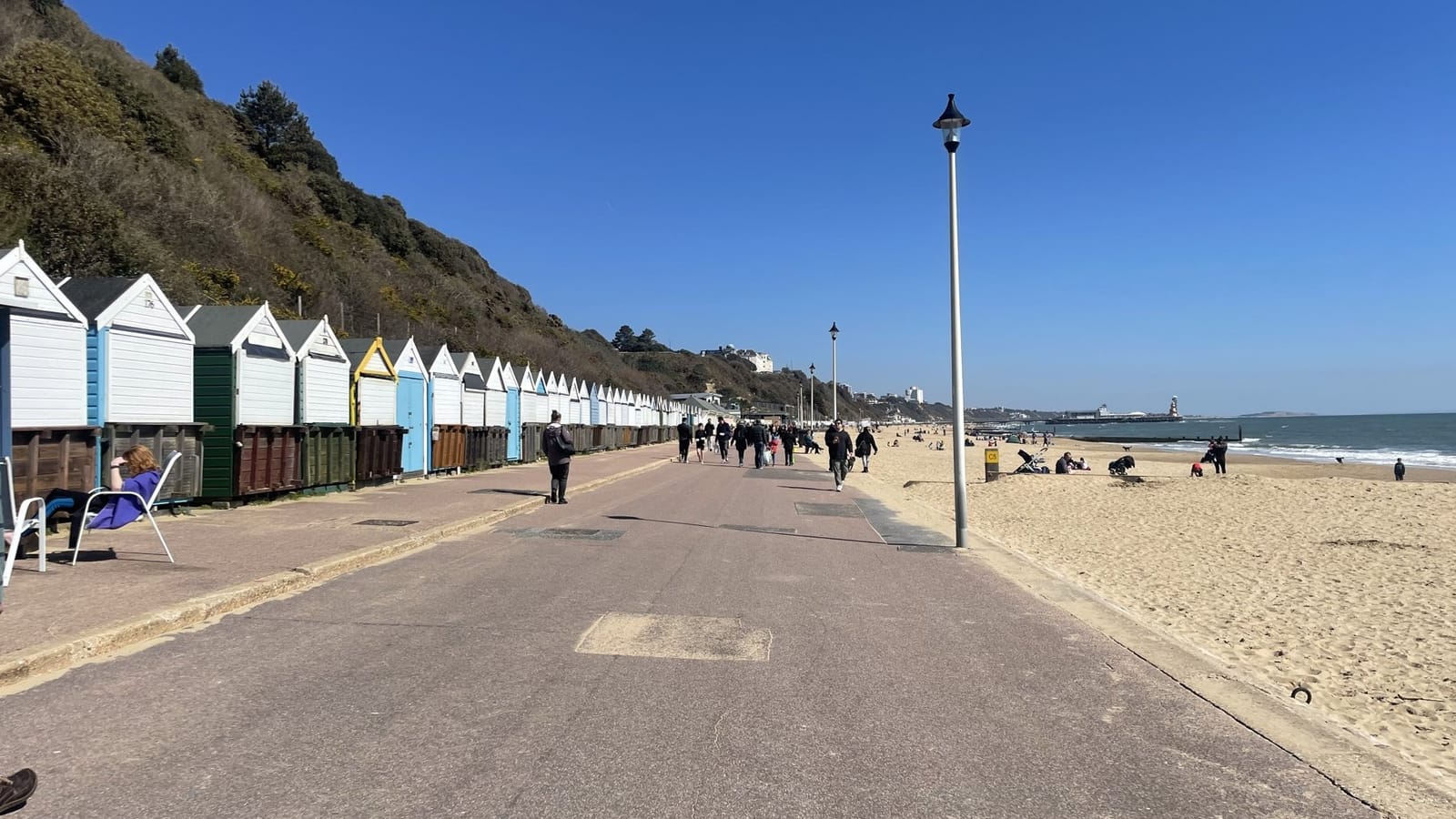
Bournemouth Travel 01: A Same-Day Ticket via Dubai, and Back to My Old Homestay
Europe 2023, part 1 of 8: a ticket bought on my last day at work15 min
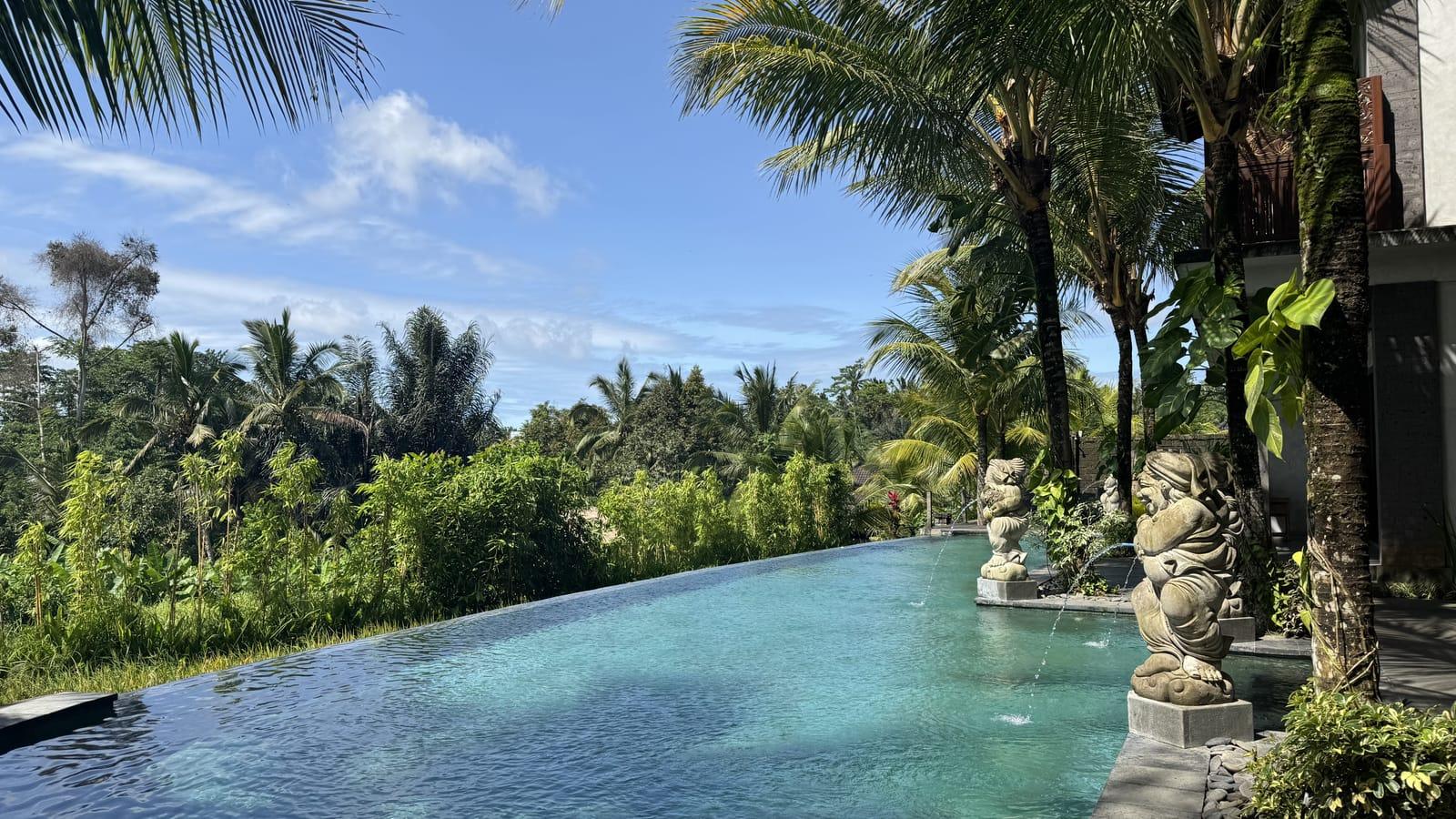
Ubud Travel 03: Best Even in the Rain, a Coconut-Bowl Office and a Rice-Field Villa
Ubud in the rain, working remotely from a villa over the rice fields13 min
Ask DailySay
Continue Reading
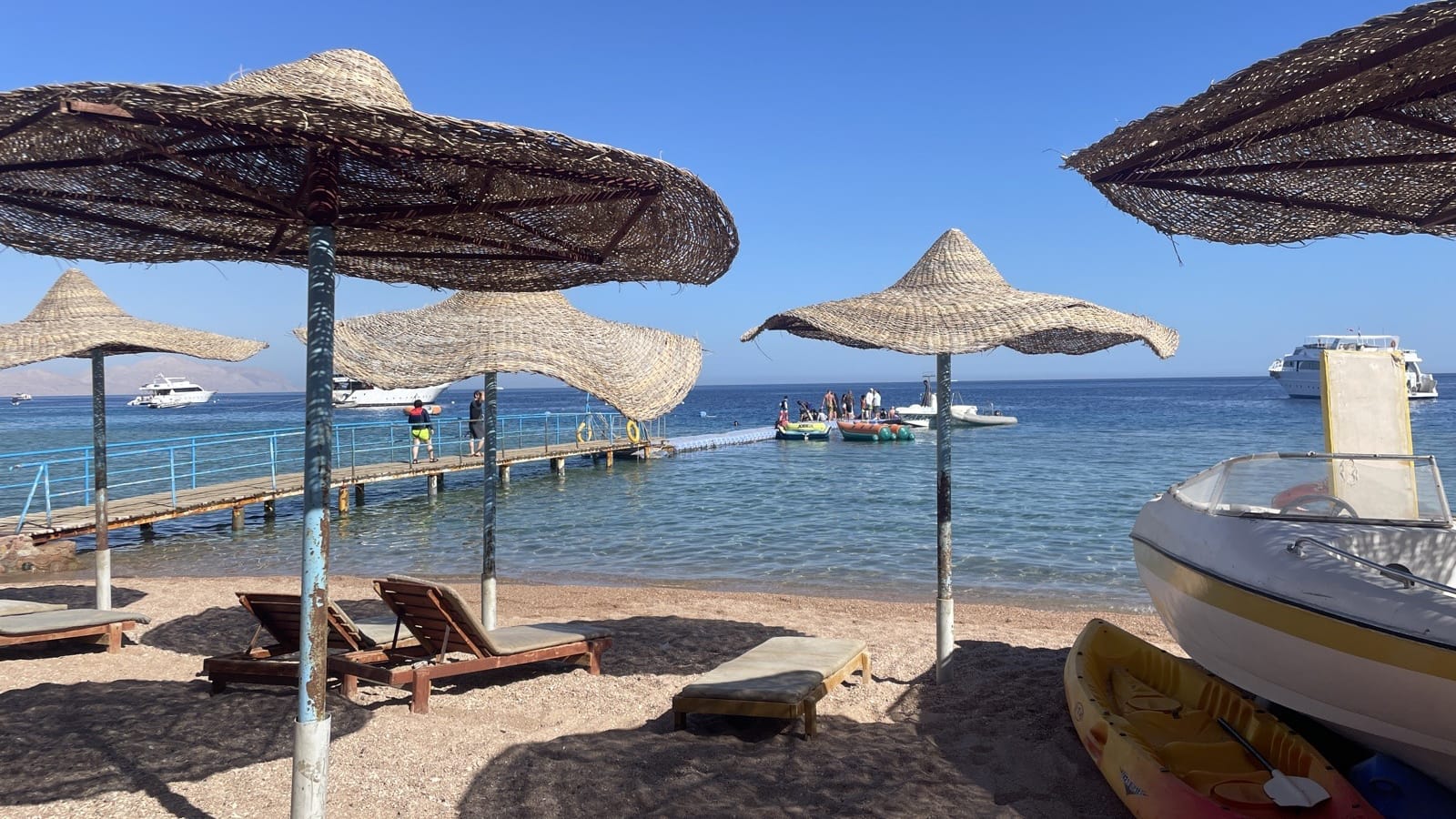
Sharm El Sheikh Travel 07: Escaping Rome's Rain to the Red Sea, With Zero Research
A week of rain forecast in Rome. One search for a country with no rain, a flight to Sharm El Sheikh. A surprise visa fee, an ATM wad, the Red Sea, the desert.
Notes worth keeping.
Occasional updates about project management, AI, products, travel, and the things I’m building.
No spam — occasional notes only. See our Privacy.