
The End of Prompt Engineering?
As models become more robust and developers transition to agentic workflows, the era of prompt hacking is ending. The future belongs to systems engineering.
Remember the gold rush of "prompt engineeringPrompt EngineeringThe practice of structuring, refining, and optimizing textual inputs to instruct generative AI models to produce desired outputs.Read More →" in 2023 and 2024? Internet gurus claimed that knowing the exact magic words to feed into an LLM was the most valuable skill of the 21st century. Job boards posted astronomical salaries for specialists who knew when to tell a model to "take a deep breath," "think step-by-step," or "act as an expert software engineer."
It was a strange, transitional phase in computing history. We were talking to computer chips in natural language, trying to discover hidden behaviors by hacking strings.
But in mid-2026, the landscape looks entirely different. Prompt hacking as a standalone discipline is dying. As frontier models become smarter, more steering-compliant, and natively integrated into agentic architectures, the focus has shifted. We no longer write long paragraphs of text promptsPrompt EngineeringThe practice of structuring, refining, and optimizing textual inputs to instruct generative AI models to produce desired outputs.Read More → to coax models into performing complex tasks. Instead, we are building systems.
The era of the "prompt writer" is ending; the era of the AI systems engineer has arrived.
The Fragility of Magic Strings
To understand why this shift occurred, we must look at the fragility of early prompt-based applications. If you built a software feature that relied on a 3,000-character prompt, you quickly realized that prompt engineeringPrompt EngineeringThe practice of structuring, refining, and optimizing textual inputs to instruct generative AI models to produce desired outputs.Read More → was a house of cards:
- Lack of Determinism: A prompt that worked perfectly 95% of the time could randomly fail on the 96th run because of the model's probabilistic nature.
- Provider Lock-in: If you optimized a prompt for Claude 3.5 Sonnet, it would often fail when sent to GPT-4o or Gemini 1.5 Pro. Every model had its own subtle quirks in how it interpreted natural language.
- Regression on Update: When providers released a minor update to a model, your promptsPrompt EngineeringThe practice of structuring, refining, and optimizing textual inputs to instruct generative AI models to produce desired outputs.Read More → would suddenly break because the model’s internal weights had shifted.
+-----------------------------------+
|  Original Prompt:                 |
|  "Write JSON output. Be concise." |
+-----------------------------------+
                 |
                 v (Model Version Update)
+-----------------------------------+
|  Failed Output:                   |
|  "Sure, here is your JSON..."     |
|  (Brokes parser with intro text)  |
+-----------------------------------+
Relying on "magic strings" was a terrible way to build stable software. In what other computing environment would a minor infrastructure update randomly break the string formatting of your application endpoints?
The Transition to Structured Systems
To solve the fragility of monolithic promptsPrompt EngineeringThe practice of structuring, refining, and optimizing textual inputs to instruct generative AI models to produce desired outputs.Read More →, developers stopped writing massive instructions and started breaking tasks down into structured pipelines.
Instead of asking a model to "Read this user support ticket, find their order, analyze their tone, and write a reply in JSON," we now build a state machine. The system is split into distinct, single-purpose steps:
- Classifier: A lightweight model classifies the ticket category (outputting a strict enum).
- Data Retriever: An API query retrieves the user's order details based on the ticket metadata.
- Draft Producer: A model draft is generated using the retrieved context.
- Validator: A final code layer ensures the draft contains no hallucinations and matches schema rules.
By decomposing the problem, we reduce the complexity of the promptsPrompt EngineeringThe practice of structuring, refining, and optimizing textual inputs to instruct generative AI models to produce desired outputs.Read More → themselves. The promptsPrompt EngineeringThe practice of structuring, refining, and optimizing textual inputs to instruct generative AI models to produce desired outputs.Read More → on each node are no longer long essays; they are simple, direct instructions. If a step fails, we know exactly which node in the graph caused the failure. We can test, debug, and optimize each step independently.
Let's look at how this is implemented using structured outputs. Rather than asking the model to write JSON and hoping it formats it correctly, we use schema validation to guarantee the structure of the output.
Here is a modern TypeScript example using Zod and a structured output client:
import { z } from "zod";

// 1. Define a strict schema for the model's output
const TicketAnalysisSchema = z.object({
  category: z.enum(["billing", "technical", "feature_request", "general"]),
  priority: z.enum(["low", "medium", "high", "critical"]),
  sentiment: z.enum(["positive", "neutral", "frustrated", "angry"]),
  suggestedAction: z.string().describe("The next immediate action the team should take"),
});

type TicketAnalysis = z.infer<typeof TicketAnalysisSchema>;

// Example execution function representing a structured node
async function analyzeTicket(ticketBody: string): Promise<TicketAnalysis> {
  // Rather than writing prompt instructions to output JSON format,
  // we pass the schema directly to the model configuration.
  const response = await aiClient.chat.completions.create({
    model: "gpt-4o-2026-05-10",
    messages: [
      { role: "system", content: "Analyze the customer ticket." },
      { role: "user", content: ticketBody }
    ],
    response_format: {
      type: "json_object",
      schema: TicketAnalysisSchema, // Enforced at the API level
    }
  });

  return TicketAnalysisSchema.parse(JSON.parse(response.choices[0].message.content));
}
By enforcing schema conformance at the API level, the prompt itself becomes trivial. We no longer write paragraphs instructing the model "Do not include markdown tags, do not start with 'Sure, here is...', output only valid JSON." The model's output tokens are forced to match the state machine of the parser.
Actionable Prompt-to-System Guidelines
If you are still writing long, complex system promptsPrompt EngineeringThe practice of structuring, refining, and optimizing textual inputs to instruct generative AI models to produce desired outputs.Read More →, it is time to refactor. Use these rules to transition your applications from prompt engineeringPrompt EngineeringThe practice of structuring, refining, and optimizing textual inputs to instruct generative AI models to produce desired outputs.Read More → to system engineering:
- Deconstruct Complexity: If your prompt is longer than 500 words, it is doing too many things. Split it into multiple sequential LLM calls or tool loops.
- Assert Schemas Everywhere: Use tools like Zod, Pydantic, or native JSON schemas to validate all structured inputs and outputs between model stages.
- Code over Text: If you can write a task as a simple regex, a database query, or a clean utility function, do not use an LLM for it. Keep LLM reasoning focused strictly on semantic analysis and synthesis.
- Version Control PromptsPrompt EngineeringThe practice of structuring, refining, and optimizing textual inputs to instruct generative AI models to produce desired outputs.Read More →: Treat system instructions like code. Store them in version control (git), run automated regression evaluations on updates, and test them across multiple model endpoints.
Future Outlook: PromptsPrompt EngineeringThe practice of structuring, refining, and optimizing textual inputs to instruct generative AI models to produce desired outputs.Read More → as Intermediate Representation (IR)
As agent frameworks evolve, humans will write fewer promptsPrompt EngineeringThe practice of structuring, refining, and optimizing textual inputs to instruct generative AI models to produce desired outputs.Read More →. PromptsPrompt EngineeringThe practice of structuring, refining, and optimizing textual inputs to instruct generative AI models to produce desired outputs.Read More → will become an Intermediate Representation (IR)—a low-level instruction set generated automatically by compilers and frameworks.
Systems like DSPy (Declarative Self-Improving Language Programs) already prove this concept. Instead of writing promptsPrompt EngineeringThe practice of structuring, refining, and optimizing textual inputs to instruct generative AI models to produce desired outputs.Read More → by hand, you define a program structure (inputs, outputs, and modules) and provide a small set of training examples. The framework then compiles the program, automatically generating, testing, and optimizing the promptsPrompt EngineeringThe practice of structuring, refining, and optimizing textual inputs to instruct generative AI models to produce desired outputs.Read More → for your specific model using constraint optimization.
In this future, writing promptsPrompt EngineeringThe practice of structuring, refining, and optimizing textual inputs to instruct generative AI models to produce desired outputs.Read More → by hand will feel like writing assembly language by hand. It will still be useful for low-level debugging or performance tuning, but most developers will write high-level logic, schemas, and assertions, leaving the instruction compilation to the frameworks.
Internal Links
- To see how standardized interfaces support modular system architecture, read MCP Will Become the USB-C of AI Applications.
- For advice on maintaining test coverage and validation during AI-assisted development, review Principles of Maintaining Code Quality with AI.
- Learn about the practical tools that are reshaping developer experience in Claude Code vs Cursor: A Builder's Deep Dive.
External References
- Explore structured schemas and prompt management on the OpenAI Developer Blog.
- Read about self-improving prompt compilers and research papers on Stanford NLP Group.
- Review developer patterns for robust agent construction on the Vercel AI SDK Docs.
What changed my perspective
In 2024, I spent two weeks optimizing a system prompt for a classification feature in our product. I tweaked adjectives, added few-shot examples, and even tried telling the model that "my job depends on this output." The performance hit 92% accuracy, and I felt like a genius.
A month later, the provider updated the model. Our accuracy dropped to 78%, and our JSON parser began throwing syntax errors because the model suddenly added polite introductory text.
That was the moment I realized prompt engineeringPrompt EngineeringThe practice of structuring, refining, and optimizing textual inputs to instruct generative AI models to produce desired outputs.Read More → was an illusion. I had spent weeks tuning parameters of a chaotic black box rather than building robust software.
We threw away the monolithic prompt and replaced it with a simple three-step state machine using schema enforcement and strict input parsing. The code grew by a few dozen lines, but the prompt shrank to a single sentence. The accuracy went to 98% and stayed there, even when we updated the model. I realized that the solution to model instability is never a better prompt; it is a better architecture.
Revision History
Argued the shift from prompt hacking to systems engineering.
- •Published systems-over-prompts thesis
Knowledge Relationships
Referenced By
These articles mention this article
Idea Evolution
Ask DailySay
Related Posts


Continue Reading
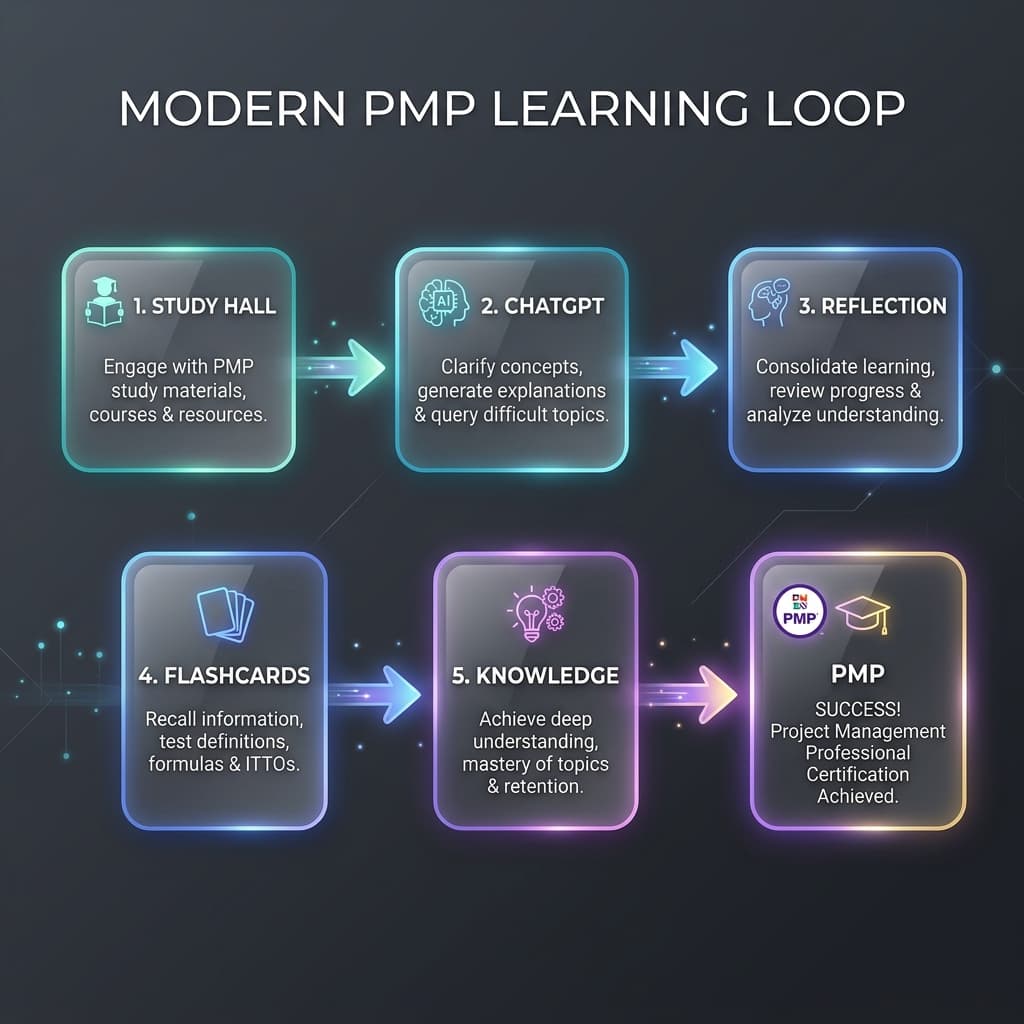
AI Didn't Help Me Pass PMP. It Changed How I Learn
How I shifted from using AI as an answer machine to a cognitive partner, building a robust learning feedback loop for the PMP exam and future knowledge systems.
Notes worth keeping.
Occasional updates about project management, AI, products, travel, and the things I’m building.
No spam — occasional notes only. See our Privacy.