
MCP Will Become the USB-C of AI Applications
In the fragmented landscape of LLM integrations, the Model Context Protocol (MCP) is emerging as the unifying open standard that links models to data sources and tools.
For years, the developer experience of building AI applications has felt like the early days of mobile electronics. Every LLM provider, agent framework, and developer environment came with its own proprietary way of connecting models to data. If you wanted to feed a local directory of source code into Claude, you had to write a script. If you wanted to connect GPT-4o to your Postgres database, you built a custom API connector. If you switched your underlying framework from LangChain to LlamaIndex, you rewrote half your data-loading pipelines.
We were drowning in custom adapters. We had no standard, unifying port.
That is why the Model Context ProtocolMCPModel Context Protocol: An open standard created by Anthropic that enables secure integrations between LLMs and external data sources or tools.Read More → (MCPMCPModel Context Protocol: An open standard created by Anthropic that enables secure integrations between LLMs and external data sources or tools.Read More →) is the most critical architectural shift in AI engineering since the introduction of function calling. Originally open-sourced by Anthropic, MCPMCPModel Context Protocol: An open standard created by Anthropic that enables secure integrations between LLMs and external data sources or tools.Read More → is rapidly establishing itself as the "USB-C of AI"—a clean, open, and bidirectional standard that abstracts how LLMs connect to data sources, filesystems, and tools.
Instead of writing $N \times M$ integrations between $N$ different models and $M$ different developer environments, MCPMCPModel Context Protocol: An open standard created by Anthropic that enables secure integrations between LLMs and external data sources or tools.Read More → enables a clean, plug-and-play architecture where models act as clients that speak to standardized MCPMCPModel Context Protocol: An open standard created by Anthropic that enables secure integrations between LLMs and external data sources or tools.Read More → servers.
The Integration Bottleneck in AI Development
Before we look at the protocol itself, it is worth detailing the problem it solves. In the early wave of building LLM applications, developers encountered a massive hurdle: models are isolated. An LLM on its own has no concept of your code repository, your database schemas, or your team’s Slack history.
To bridge this gap, we built custom pipelines. We set up RAGRAGRetrieval-Augmented Generation: A technique to improve LLM accuracy by retrieving relevant documents from an external source before generating a response.Read More → (Retrieval-Augmented GenerationRAGRetrieval-Augmented Generation: A technique to improve LLM accuracy by retrieving relevant documents from an external source before generating a response.Read More →) systems, constructed API gateways, and defined custom tool sets. But every integration was custom-tailored:
  +--------------+               +-------------+
  |  AI Model /  | ----(Custom)-->| Postgres DB |
  |  Framework   |               +-------------+
  |              |               +-------------+
  | (LangChain/  | ----(Custom)-->| GitHub API  |
  |  LlamaIndex) |               +-------------+
  |              |               +-------------+
  |              | ----(Custom)-->| Local Files |
  +--------------+               +-------------+
This model-centric integration pattern created major issues. First, security was incredibly difficult to audit because every connection was implemented as ad-hoc code. Second, it limited the reuse of tools. If you spent days building a robust Slack connector for a LangChain agent, you couldn't easily port it to a developer tool like Cursor or a terminal editor like Claude Code without rewriting the integration wrapper.
We needed a separation of concerns. We needed a boundary between how data is retrieved and how the model reasons about it.
The Core Concept of MCPMCPModel Context Protocol: An open standard created by Anthropic that enables secure integrations between LLMs and external data sources or tools.Read More →
Model Context ProtocolMCPModel Context Protocol: An open standard created by Anthropic that enables secure integrations between LLMs and external data sources or tools.Read More → separates the system into two distinct components:
- MCPMCPModel Context Protocol: An open standard created by Anthropic that enables secure integrations between LLMs and external data sources or tools.Read More → Clients: Development applications, IDEs, or agent environments (like Cursor, VS Code, or Claude Desktop) that require access to tools and data.
- MCPMCPModel Context Protocol: An open standard created by Anthropic that enables secure integrations between LLMs and external data sources or tools.Read More → Servers: Lightweight, modular programs that expose specific data sources or capabilities through the standard protocol.
graph LR
    subgraph Clients [MCPMCPModel Context Protocol: An open standard created by Anthropic that enables secure integrations between LLMs and external data sources or tools.Read More → Clients]
        IDE[VS Code / Cursor]
        Term[Claude Code CLI]
        App[Custom Agent App]
    end

    subgraph Protocol [Model Context ProtocolMCPModel Context Protocol: An open standard created by Anthropic that enables secure integrations between LLMs and external data sources or tools.Read More →]
        direction TB
        JSON[JSON-RPC 2.0 over SSE or Stdpipe]
    end

    subgraph Servers [MCPMCPModel Context Protocol: An open standard created by Anthropic that enables secure integrations between LLMs and external data sources or tools.Read More → Servers]
        GitSrv[GitHub Server]
        DbSrv[Postgres Server]
        FsSrv[Local File Server]
    end

    Clients --> Protocol
    Protocol --> Servers
The communication between the client and the server happens over JSON-RPC 2.0. By using standard input/output (stdio) for local servers and Server-Sent Events (SSE) for remote services, MCPMCPModel Context Protocol: An open standard created by Anthropic that enables secure integrations between LLMs and external data sources or tools.Read More → makes it simple to run adapters locally or host them in the cloud.
The protocol defines three core types of capabilities:
- Resources: Readable data sources. This could be local files, database tables, or API outputs.
- PromptsPrompt EngineeringThe practice of structuring, refining, and optimizing textual inputs to instruct generative AI models to produce desired outputs.Read More →: Standardized templates that help the model build structured instructions (e.g., a code review prompt).
- Tools: Executable functions that allow the model to make changes in the outside world (e.g., executing a command or writing a file).
Under the Hood: Building a Simple MCPMCPModel Context Protocol: An open standard created by Anthropic that enables secure integrations between LLMs and external data sources or tools.Read More → Server
To understand how simple and elegant this is, let's look at how to implement a basic MCPMCPModel Context Protocol: An open standard created by Anthropic that enables secure integrations between LLMs and external data sources or tools.Read More → server in Node.js. Suppose we want to expose our local database table structures so that any AI model running in our editor can understand our schemas without us copy-pasting them.
Here is a simple local MCPMCPModel Context Protocol: An open standard created by Anthropic that enables secure integrations between LLMs and external data sources or tools.Read More → server using the official TypeScript SDK:
import { Server } from "@modelcontextprotocol/sdk/server/index.js";
import { StdioServerTransport } from "@modelcontextprotocol/sdk/server/stdio.js";
import {
  ListResourcesRequestSchema,
  ReadResourceRequestSchema,
} from "@modelcontextprotocol/sdk/types.js";

// Initialize the MCPMCPModel Context Protocol: An open standard created by Anthropic that enables secure integrations between LLMs and external data sources or tools.Read More → server
const server = new Server(
  {
    name: "schema-inspector",
    version: "1.0.0",
  },
  {
    capabilities: {
      resources: {},
    },
  }
);

// Define available resources
const SCHEMAS = {
  "users": "CREATE TABLE users (id SERIAL PRIMARY KEY, email VARCHAR(255), created_at TIMESTAMP);",
  "posts": "CREATE TABLE posts (id SERIAL PRIMARY KEY, title TEXT, author_id INT REFERENCES users(id));"
};

// 1. Register resource list handler
server.setRequestHandler(ListResourcesRequestSchema, async () => {
  return {
    resources: Object.keys(SCHEMAS).map((name) => ({
      uri: `db://schema/${name}`,
      name: `${name} table schema`,
      mimeType: "text/plain",
      description: `DDL schema statement for the ${name} table`
    })),
  };
});

// 2. Register resource read handler
server.setRequestHandler(ReadResourceRequestSchema, async (request) => {
  const uri = new URL(request.params.uri);
  const tableName = uri.pathname.split("/").pop();

  if (!tableName || !(tableName in SCHEMAS)) {
    throw new Error(`Resource not found: ${request.params.uri}`);
  }

  return {
    contents: [
      {
        uri: request.params.uri,
        mimeType: "text/plain",
        text: SCHEMAS[tableName as keyof typeof SCHEMAS],
      },
    ],
  };
});

// Connect to transport
const transport = new StdioServerTransport();
await server.connect(transport);
console.error("Schema Inspector MCPMCPModel Context Protocol: An open standard created by Anthropic that enables secure integrations between LLMs and external data sources or tools.Read More → Server running on stdio");
To run this server in an editor like Cursor or Claude Desktop, you simply add its command configuration to your client configuration file:
{
  "mcpServers": {
    "schema-inspector": {
      "command": "node",
      "args": ["/path/to/server.js"]
    }
  }
}
Once loaded, the client (e.g. Cursor) automatically asks the server what resources are available. When you write a prompt like "Help me write a query to join users and posts," Cursor reads the resources db://schema/users and db://schema/posts behind the scenes and injects the DDL schemas directly into the prompt context.
Actionable Integration Strategies
If you are developing AI agentsAI AgentAn autonomous software entity that perceives its environment through sensors, makes decisions, and executes actions using tools.Read More → or building developer tools, you should stop writing custom API clients immediately. Instead, adapt your data layers to MCPMCPModel Context Protocol: An open standard created by Anthropic that enables secure integrations between LLMs and external data sources or tools.Read More →. Here are three strategies to start implementing today:
- Standardize Internal APIs: Instead of building internal dashboard APIs for your team’s custom AI tools, wrap those endpoints in an MCPMCPModel Context Protocol: An open standard created by Anthropic that enables secure integrations between LLMs and external data sources or tools.Read More → server. This allows any engineer on the team to query databases, trigger builds, or access documentation directly inside their IDE.
- Utilize Community Servers: Before building a server from scratch, check the growing list of open-source MCPMCPModel Context Protocol: An open standard created by Anthropic that enables secure integrations between LLMs and external data sources or tools.Read More → servers. There are already highly optimized servers for GitHub, Slack, Postgres, Jira, Google Maps, and local terminals.
- Decouple Tool Permissions: By keeping tool execution logic inside the MCPMCPModel Context Protocol: An open standard created by Anthropic that enables secure integrations between LLMs and external data sources or tools.Read More → server, you can control access control and write logs at the transport level. An agent cannot access a database unless the server explicitly grants read/write permissions.
Future Outlook: The Universal Interface
In the near future, the boundary of what defines an "application" will change. Today, we interact with software through graphical user interfaces (GUIs). Tomorrow, AI agentsAI AgentAn autonomous software entity that perceives its environment through sensors, makes decisions, and executes actions using tools.Read More → will navigate resources and tools using standard application schemas.
If every SaaS company, cloud database provider, and local device OS exposes its capabilities via MCPMCPModel Context Protocol: An open standard created by Anthropic that enables secure integrations between LLMs and external data sources or tools.Read More →, the complexity of integration drops to near zero. A developer will no longer write API integrations; instead, they will simply spin up the database's official MCPMCPModel Context Protocol: An open standard created by Anthropic that enables secure integrations between LLMs and external data sources or tools.Read More → server, and their coding agent will instantly know how to write tables, read schemas, and run migrations.
MCPMCPModel Context Protocol: An open standard created by Anthropic that enables secure integrations between LLMs and external data sources or tools.Read More → is not just another API format; it is the universal middleware that will power the era of autonomous software agents.
Internal Links
- To see how agentic coding environments compare when built on top of standardized protocols, check out Claude Code vs Cursor: A Builder's Deep Dive.
- To maintain structural integrity while building these integrations, review Principles of Maintaining Code Quality with AI.
- For a wider view on how AI workflows are evolving from simple auto-completion to autonomous terminal interactions, read Beyond Copilots: Why AI Agents Changed My Daily Workflow.
External References
- Learn more about the open-source announcement from the Anthropic MCP Blog.
- Explore the official protocol specification and documentation on the Model Context Protocol Website.
- Read about developer tools using standardized architectures on the Vercel Developer Blog.
What changed my perspective
For a long time, I believed that the future of LLM integrations lay in smarter models. I assumed that as context windows expanded to millions of tokens, we would simply dump all documentation, database dumps, and repository code directly into the model's prompt window.
But building production agents taught me that context size is not the bottleneck; noise and access control are. Dumping raw logs and tables into a prompt degrades reasoning efficiency, raises token costs, and introduces security vulnerabilities.
MCPMCPModel Context Protocol: An open standard created by Anthropic that enables secure integrations between LLMs and external data sources or tools.Read More → forced me to realize that LLMs are not databases; they are CPUs. Like traditional microprocessors, they require clean memory caches and strict device drivers. MCPMCPModel Context Protocol: An open standard created by Anthropic that enables secure integrations between LLMs and external data sources or tools.Read More → provides those drivers. The moment I connected my editor to a Postgres database via a local MCPMCPModel Context Protocol: An open standard created by Anthropic that enables secure integrations between LLMs and external data sources or tools.Read More → server and watched the model reason about the schemas cleanly without lag, I realized we had crossed a point of no return. We finally had our USB-C.
Revision History
Introduced MCP as the USB-C of AI application integrations.
- •Published MCP architecture overview
Knowledge Relationships
- ReferencesThe End of Prompt Engineering?
Referenced By
These articles mention this article
Idea Evolution
Ask DailySay
Related Posts


Continue Reading
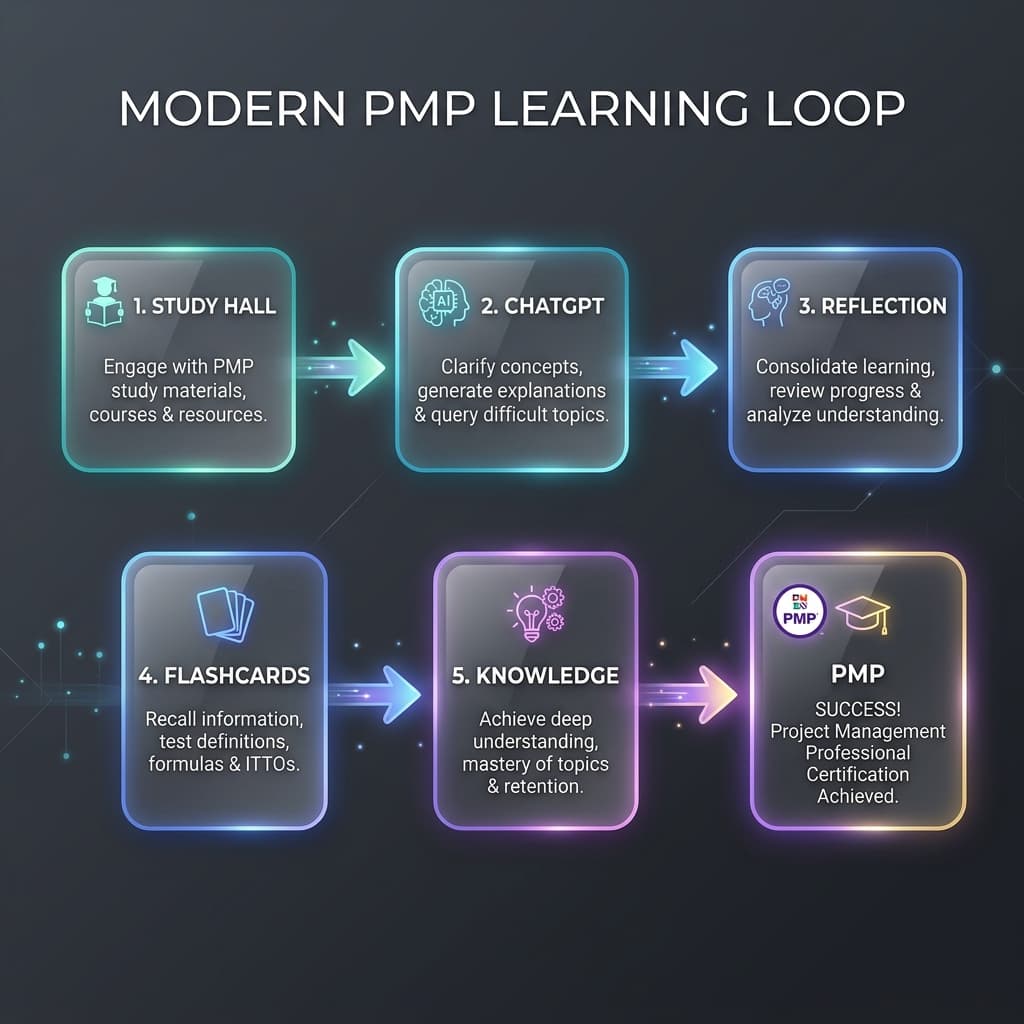
AI Didn't Help Me Pass PMP. It Changed How I Learn
How I shifted from using AI as an answer machine to a cognitive partner, building a robust learning feedback loop for the PMP exam and future knowledge systems.
Notes worth keeping.
Occasional updates about project management, AI, products, travel, and the things I’m building.
No spam — occasional notes only. See our Privacy.